

Agribusiness and mining are two of Africa’s biggest economic engines. One feeds the continent and supports nearly half of its workforce. The other powers global supply chains with the minerals needed for batteries, electric vehicles, and renewable energy. The real question for investors is simple: which one will drive Africa’s next decade of growth, the farms or the mines?
For decades agriculture has fed nations, employed millions, and shaped rural livelihoods. Mining has generated foreign exchange, built infrastructure, and drawn global interest for its resource wealth.
Now, as the global economy shifts (to green tech, changing diets, climate shocks), investors and policymakers are debating which sector, agribusiness or mining, will drive the investment opportunities in Africa next.
Will the continent lean more on farming, or on ore? Or both, in different mixes? This blog breaks down agribusiness vs mining in terms of return, sustainability, risks, and long-term potential, to help you see where the strongest investment opportunities in Africa lie over the next decade.
Agriculture remains the backbone of Africa’s economy. According to an African Development Bank report, agriculture accounts for around one-quarter of Africa’s GDP, which is higher than in many other developing regions. For many countries, it’s still the main employer. FAO data from mid-2025 show that agriculture, forestry, and fishing sectors employ nearly 46% of Africa’s workforce.
What else is new: innovations are pushing agribusiness beyond subsistence. Agri-tech, improved irrigation, better seed varieties, mobile platforms for supply chains, post-harvest processing, these are all scaling up. The OECD-FAO Agricultural Outlook 2025-2034 projects that agricultural production globally will increase by about 14% over the decade, with much of that coming from improvements in productivity. Sub-Saharan Africa and Near East/North Africa are expected to contribute a sizable share of that growth.
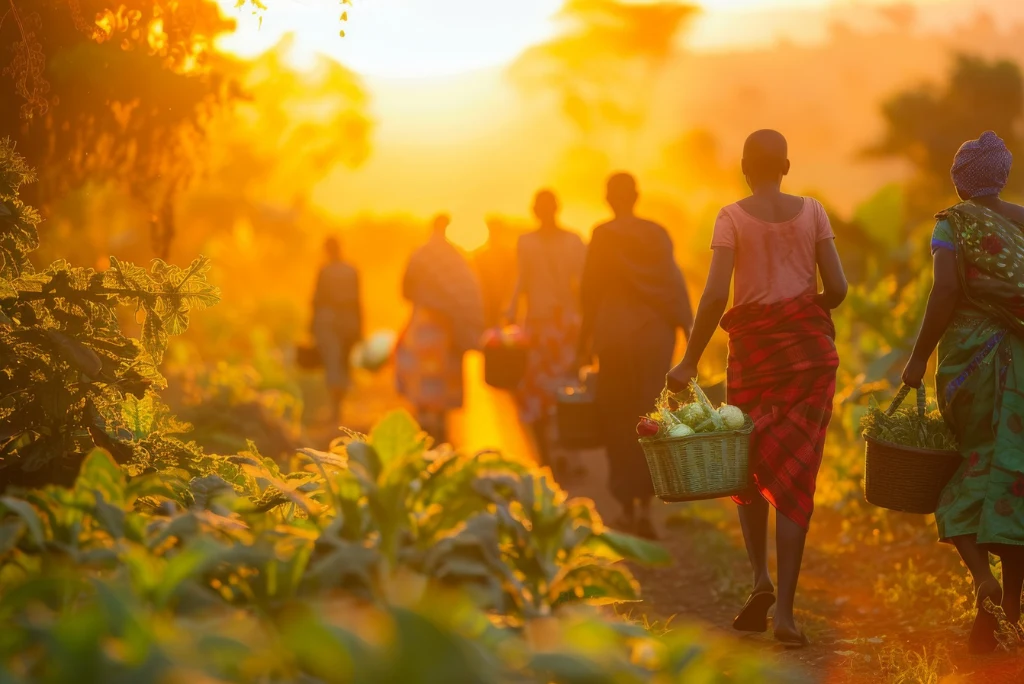
Also, FAO reports increasing cultivation area for crops like maize, soy, sugarcane, and increasing outputs in livestock, meat and fish, albeit from low bases.
What this really means is agribusiness isn’t just about crops anymore, it’s becoming Africa’s innovation story. There’s growing room for value-chain investments: processing, cold storage, export infrastructure. And domestic demand is rising fast, rising population, shifting diets, urbanization all push for more and better food.
Mining still holds tremendous promise. Africa is home to huge reserves of critical minerals needed for clean energy, tech, and global infrastructure. UNCTAD data shows Africa holds ~55% of the world’s cobalt, about 47.7% of manganese, 21.6% natural graphite, 5.9% copper, 5.6% nickel, and 1% of lithium. With decarbonization and energy transition accelerating globally, demand for these minerals is surging.
Some countries are pulling ahead. For example, Mauritania’s mining sector jumped in importance: in 2022 it contributed ~24% of GDP (up from ~18% earlier) and accounted for ~30% of national revenues. Copper and cobalt-rich Zambia also shows momentum: mining revenues are growing, investment in energy transition minerals is seen as a lever for economic transformation.
But mining has risks. Commodity prices are volatile. Governance issues loom. Resource nationalism is stronger in many countries. Environmental damage, social conflict, and insufficient benefit capture often undercut gains. Also, many mining operations export raw minerals, capturing less value locally. There are also tax incentive regimes in places like DRC that result in revenue shortfalls (about 5% of GDP) while doing little for vulnerable households.
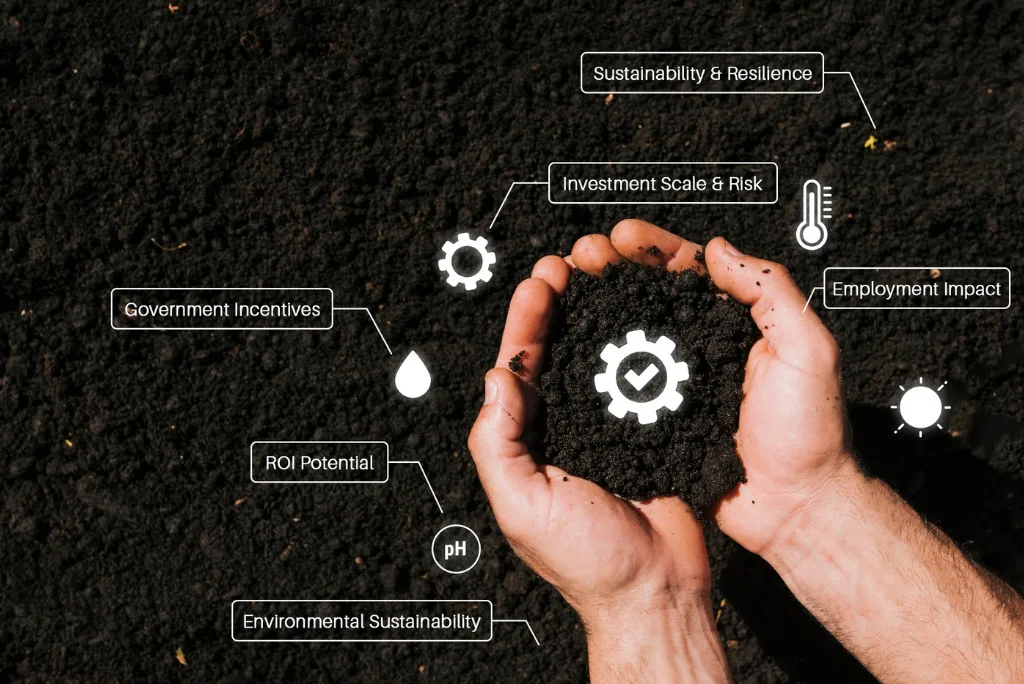
Here’s a side-by-side look at how agribusiness and mining compare across several critical factors. Both sectors remain central to investment opportunities in Africa, but they appeal to different investor profiles. For those planning to invest in Africa, the choice often depends on balancing stability against high-yield volatility.
| Factor | Agribusiness | Mining |
| ROI Potential (Short-Term vs Long-Term) | Moderate short-term returns; often slow build-ups due to land prep, input supply, weather risks. Long-term: steady returns as productivity, value‐chains, export markets mature. | High short-term returns when commodity prices are favorable; longer cycles with upfront capex, regulatory delays. Long-term: potential for huge returns especially with critical minerals demand. |
| Investment Scale & Risk | Lower entry cost for small/mid scale (farmer cooperatives, processing plants), though scaling requires infrastructure (roads, cold chain). Risks: climate, pests, supply disruptions, price fluctuations. | Very high capital required (exploration, infrastructure, extraction). Geopolitical and regulatory risks. Exposure to global price swings. Environmental/social risk higher. |
| Employment Impact | Very high. Agriculture employs ~46% of Africa’s workforce. Also many indirect jobs in processing, transport, retail. | Can generate fewer direct jobs relative to capital invested; more capital-intensive. But artisanal and small-scale mining (ASM) are major employers — often under-formalized but important. |
| Environmental Sustainability | Mixed. Agriculture can degrade soils, overuse water, contribute to deforestation if unmanaged. But with best practice, sustainable intensification, climate adaptation, agroforestry, eco-irrigation, impacts can be reduced. | Generally higher environmental footprint: land damage, water pollution, tailings, carbon emissions. Stricter regulation and green mining practices are improving this in some countries. |
| Government Incentives / Regulatory Hurdles | Incentives increasingly available: subsidies, value chain financing, export support, agricultural extension. But regulatory hurdles: land rights, tenure, trade barriers, input availability. | Big incentives sometimes (tax breaks, royalties, export contracts), but also counter-pressure: resource nationalism, changing mining codes, permit delays, environmental licensing, community consent. |
| Sustainability & Resilience | More resilient to global shocks when food demand stays strong. Domestic markets offer buffer. Climate change remains a threat. Diversification (crops + livestock + fish) helps. | Vulnerable to global demand swings, price collapses. Dependency on global supply chains. Renewables transition offers tailwinds but only if value addition and local processing scale up. |
What this really means is that neither sector is strictly “better” in all senses. Mining offers potentially higher returns but bigger risks. Agribusiness offers stability, employment, and local resilience, but requires patient investment and strong support systems.
Looking ahead, which sector aligns better with Africa’s sustainable development goals (including Agenda 2063) and regional growth visions like AfCFTA? The answer: both, but with nuanced strategies.

Agenda 2063 emphasizes inclusive growth, structural transformation, value addition, and intra-African trade. The AfCFTA (African Continental Free Trade Area) reduces trade barriers, which helps agribusiness penetrate regional markets more easily, think processed foods, horticulture, meat products. Also, governments are increasingly integrating agribusiness value-chain financing, climate adaptation subsidies, and digital agriculture. All that improves sustainability and improves ROI for agribusiness.
On mining side, recent policy directions are visible. More African states are revising mining codes to ensure higher local content, stronger environmental regulations, better revenue capture. Green mining reforms and demand for clean energy minerals are pushing mining towards sustainable practices. Still, much of Africa captures only about 40% of the revenue it could from its critical minerals as UNCTAD points out.
Technology, climate adaptation, and clean energy are game changers. For agriculture: precision farming, drought-resistant seeds, improved irrigation, climate-smart practices will matter more. For mining: greener extraction, local processing, cleaner energy for operations, stronger governance will define which operations thrive.
Also, demographic trends matter. Africa’s population expected to grow fastest among world regions; urbanization, higher incomes, shifting diets — all increase demand for food, protein. That favors agribusiness growth. Meanwhile, global demand for critical minerals is projected to continue rising steeply (for batteries, tech, renewable infrastructure), favoring mining.
Mining powers exports; agribusiness powers lives. Africa’s future might need both — working in sync.
If I were advising an investor, here’s what I’d lean toward: agribusiness offers lower risk and more social stability, strong alignment with domestic demand, jobs, and climate goals, especially when backed by smart policy. Mining offers the potential for high returns and is crucial for trade balances and fueling the global energy transition. But without tackling governance, environmental costs, and ensuring value stays in-country, its long-term gains may be more uneven.
So: diversify. Invest in agribusiness where you can build resilient, local value chains. Participate in mining especially of critical minerals, but with a focus on sustainable, value-added processing. For those ready to invest in Africa, the next decade won’t be about picking one sector, it’ll be about understanding how both shape the continent’s real potential.
Disclaimer: The information in this article is based on publicly available data and reports from reputable institutions, including the African Development Bank (AfDB), World Bank, UNCTAD, and FAO, as of 2023–2025. It is intended for general informational purposes only and should not be taken as financial, investment, or policy advice. Readers are encouraged to review official publications and consult qualified experts before making any investment or business decisions related to the sectors discussed.
Sources:
FAOHome+1
OECD+1
FAOHome
UNCTAD+1
UNCTAD+1
afdb.africa-newsroom.com
World Bank
ACP
FAOHome+1
UNCTAD+1
1. What is the growth outlook for agribusiness vs mining in Africa?
Agribusiness is expected to grow steadily, driven by rising populations, urbanization, and changing diets. FAO projections suggest that crop and livestock output will expand significantly over the next decade, especially in Sub-Saharan Africa. Meanwhile, mining is poised for high growth in strategic minerals like cobalt, manganese, copper, and lithium, thanks to the global energy transition and surging demand for clean energy technologies. The catch: mining can deliver big gains quickly when commodity prices spike, but it’s more volatile. Agribusiness grows slower, but its expansion tends to be more predictable and resilient to global shocks.
2. What are the key risks in investing in African agribusiness compared to mining?
Agribusiness faces climate-related risks: droughts, floods, pests, along with infrastructure bottlenecks like roads, storage, and cold chains. Prices can fluctuate, but local demand usually provides some buffer. Mining, on the other hand, is exposed to global commodity swings, regulatory shifts, governance issues, and environmental or social conflicts. High capital is needed upfront, and benefits often leak abroad unless local processing is prioritized. In short: agribusiness is “slow and steady but climate-sensitive,” mining is “potentially high-return but high-volatility.”
3. Which countries in Africa are best for agribusiness investment vs mining?
For agribusiness, countries with fertile land, supportive policies, and growing domestic markets shine. Nigeria, Kenya, Ethiopia, Ghana, and South Africa are often top picks due to strong agricultural sectors and export potential. For mining, resource-rich nations with stable regulatory frameworks are attractive: DRC (cobalt, copper), Zambia (copper, cobalt), Mauritania (iron ore), South Africa (gold, platinum, manganese), and Botswana (diamonds). Each sector requires aligning investment with local infrastructure, governance, and trade dynamics.
4. What is the future economic growth in Africa?
Africa’s economy is projected to continue growing faster than the global average, supported by demographic expansion, urbanization, and rising middle-class consumption. The World Bank and IMF estimate GDP growth of 4–5% annually in many Sub-Saharan economies over the next five years, with growth uneven across sectors. Agriculture and mining remain central: agribusiness for domestic consumption and employment, mining for trade balances and participation in the global energy transition. Growth will also depend on policy reforms, infrastructure development, and digital adoption.
5. Can agribusiness and mining be complementary investment strategies in Africa?
Absolutely. The sectors address different but complementary needs. Agribusiness builds domestic resilience, jobs, and food security, while mining fuels exports, revenue generation, and participation in global supply chains. Investors can diversify risk by blending steady, long-term agribusiness returns with selective, high-return mining ventures, especially in critical minerals. Smart strategies also leverage local infrastructure and value-chain integration to maximize economic and social impact. Essentially, Africa’s future growth story may not be “either-or” but a “both-and” approach.
Africa is increasingly catching serious attention from investors around the world. For many countries, growth prospects remain strong: improving economic fundamentals, demographic tailwinds, rising consumption and infrastructure gaps make for a compelling growth narrative. But, along with potential comes volatility: currency swings, shallow markets, uneven regulation. That volatility forces a choice, do you try to […]

If you’re exploring investment opportunities in Africa, bonds are usually one of the first stopovers. The continent’s growth story, shifting interest-rate cycles, and rising corporate issuances mean there’s real activity for anyone looking to invest in Africa. But here’s the thing: not all bonds play by the same rules. Government debt and corporate paper behave […]
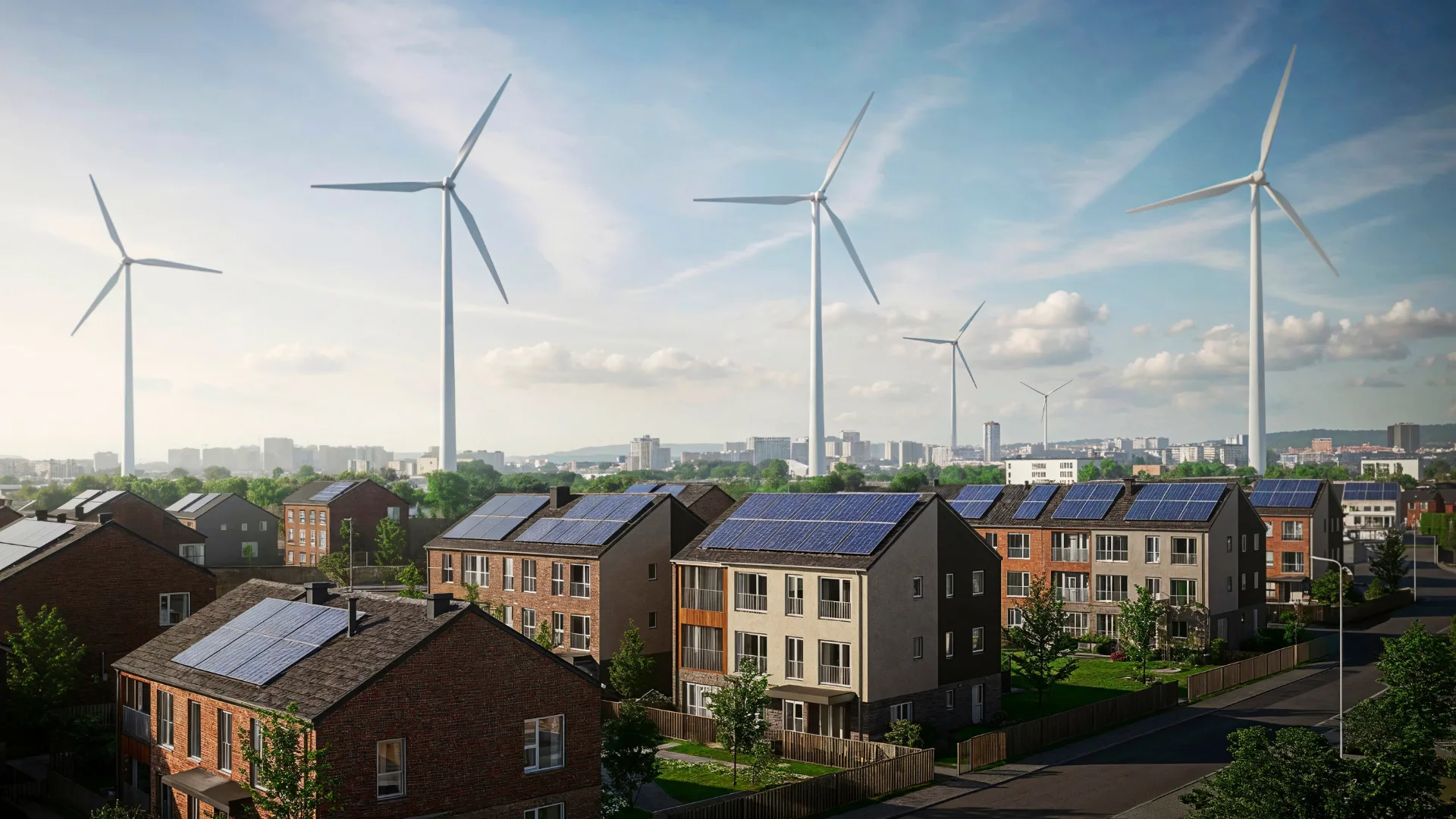
Introduction Investing in Africa today often comes down to one big question: put your money into real estate or into renewable energy? Real estate gives you something solid you can touch. Renewable energy gives you growth tied to the continent’s massive power needs. Both sectors can deliver strong returns, but they behave very differently depending […]