
Africa’s megacities grab the headlines, but some of the continent’s most compelling opportunities are quietly taking shape far from the urban skyline.
Yes, the continent is urbanizing fast. The World Bank (2024) notes that Africa’s urban population is expected to nearly double by 2050. Yet today, a large share of Africans still live and work in rural areas, where agriculture, natural resources, and early-stage infrastructure continue to dominate economic activity.
What this really means is simple. Investors who focus only on cities may be missing a meaningful slice of the next growth wave. The real question now is not urban versus rural in isolation. It is where the next layer of value is quietly building across Africa.
Let’s break it down.
Urban investment in Africa typically concentrates around real estate, manufacturing clusters, logistics hubs, fintech ecosystems, and service-driven economies. These markets benefit from density, connectivity, and stronger consumer demand.
Rural investment, by contrast, revolves around agriculture and agri-processing, renewable mini-grids, rural transport networks, and natural resource development. These regions often lack infrastructure but hold significant productive capacity.
According to the African Development Bank (AfDB, 2024), urban centers in Sub-Saharan Africa generate higher productivity due to service-sector concentration and better infrastructure access. Rural regions, however, retain a large share of the continent’s agricultural and resource potential.
Cities concentrate value. But rural markets often concentrate untapped potential.
Urban Africa continues to attract the bulk of private capital, and the logic is clear.
First, cities concentrate GDP. The World Bank (2023) highlights that urban areas across developing economies typically deliver higher per-worker productivity, largely driven by services, trade, and industrial clustering.
Second, infrastructure is simply better. Ports, roads, data networks, and power supply tend to be more reliable in major African cities. That lowers execution risk and accelerates time to scale.
Third, consumer markets are deeper. Rapid population growth in cities such as Lagos, Nairobi, and Accra has fueled demand across retail, fintech, logistics, and housing. UNCTAD (2024) notes that services and digital sectors have been key drivers of foreign investment flows into African urban economies.
But the urban story is no longer frictionless.
Operating costs are rising. Prime real estate is tightening. Competitive pressure in fintech, e-commerce, and logistics is intensifying. In several major markets, early-mover advantages are already priced in.
Urban Africa offers speed and scale but increasingly at a premium.
Rural Africa still anchors the continent’s largest structural sector: agriculture. According to the FAO (2024), agriculture accounts for roughly one-third of Africa’s GDP and supports the majority of rural livelihoods.
This is where agricultural investment in Africa is gaining renewed attention.
Large-scale initiatives such as the AfDB’s Special Agro-Industrial Processing Zones are channeling billions into value chains that connect farmers to processors and export markets (AfDB, 2024). At the same time, rural electrification and mini-grid programs supported by the World Bank and national governments are expanding productive capacity in underserved regions.
Entry costs are often lower. Land availability is higher. And in many markets, competition remains relatively thin compared to major cities.
Still, the risks are real.
Infrastructure gaps persist. Market access can be uneven. Execution requires local partnerships and longer timelines. IMF (2024) analysis repeatedly points to logistics and transport constraints as key barriers to rural productivity growth across the continent.
Rural Africa moves slower but the upside runway is longer.

What this really means is investors need to stop thinking in binaries.
Urban markets offer immediate scale. Rural markets offer expansion headroom. The smart question is where the risk-adjusted opportunity sits over different time horizons.
| Factor | Urban Markets | Rural Markets |
| Market size today | Large and dense | Fragmented but broad |
| Growth headroom | Moderate in mature cities | High in underdeveloped regions |
| Capital intensity | Higher upfront costs | Often lower entry costs |
| Time to scale | Faster | Slower but compounding |
| Policy focus | Smart cities, digital economy | Food security, rural electrification |
| Employment impact | Services-driven | Agriculture and value chains |
From a macro standpoint, Africa still requires massive investment to unlock its full growth trajectory. The AfDB (2024) estimates the continent faces an annual infrastructure financing gap of roughly $68–108 billion. That gap spans both urban and rural systems.
Here’s where the nuance matters.
Urban investments continue reshaping investment opportunities in Africa, particularly in fintech, logistics, and real estate. These sectors benefit from network effects and policy momentum around digital economies.
But beyond major cities, new business opportunities in Africa are emerging across agricultural value chains, cold storage, rural logistics, and decentralized energy systems. Food import dependence across many African economies is pushing governments to prioritize domestic production capacity, creating structural tailwinds for agricultural investment in Africa.
The mini-verdict?
Urban Africa still dominates near-term deployable capital. Rural Africa increasingly dominates long-term structural upside.
Capital flows already reflect this dual-track reality.
In urban markets, investors continue to favor fintech platforms, last-mile logistics, commercial real estate, and data infrastructure. UNCTAD (2024) reports that digital economy investments remain heavily concentrated in major African cities where connectivity and consumer density are strongest.
Meanwhile, institutional capital is quietly expanding into rural-facing sectors. Agricultural processing zones, solar mini-grids, irrigation systems, and cold-chain logistics are drawing increased attention from development finance institutions and private equity.
The AfDB and World Bank have both scaled support for agri-value chains and rural energy access between 2023 and 2025, signaling growing institutional confidence.
The next decade won’t be urban versus rural. It will be about connecting both.

No serious strategy ignores the downside.
Infrastructure bottlenecks remain a cross-cutting constraint, especially in transport and power. Currency volatility continues to affect cross-border returns in several African markets, according to IMF (2024) assessments.
Policy consistency also varies by country, requiring careful jurisdictional screening. Rural projects carry higher execution risk due to logistics complexity and fragmented supply chains. Urban markets, meanwhile, face saturation risk in crowded sectors like fintech and premium real estate.
Disciplined structuring matters more than ever.
Urban markets will continue to dominate Africa’s near-term investment story. The scale is there. The infrastructure is stronger. The pathways to growth are clearer.
But the deeper, less crowded upside is increasingly rural.
Agricultural value chains, decentralized energy, and rural logistics are quietly reshaping the map of investment opportunities in Africa. For investors willing to manage complexity and take a longer view, the payoff profile can be compelling.
If you’re serious about Africa’s next growth cycle, don’t just follow the skyline, follow the supply chains that run far beyond it.
Disclaimer: This article is provided for informational purposes only and does not constitute investment, financial, legal, or tax advice. While data has been drawn from reputable institutional sources, conditions across African markets can change rapidly. Investors should conduct independent due diligence and consult qualified professional advisors before making any investment decisions. References to regulatory bodies, including UAE authorities such as the Ministry of Finance and Federal Tax Authority, are general in nature and may not apply to all jurisdictions or transaction structures.
Sources
Rural Africa is opening up in areas many investors historically overlooked. Beyond primary farming, strong business opportunities in Africa are emerging in agri-processing, cold storage, rural logistics, warehousing, irrigation services, and decentralized renewable energy. According to the African Development Bank (2024), value-addition within agricultural supply chains remains significantly underdeveloped across many countries. What this really means is the biggest gaps often sit between farm production and market delivery. Investors who build the missing middle, storage, processing, and transport, are finding the clearest whitespace.
Here’s the shift: urban markets are becoming more competitive and expensive, while rural regions still offer expansion headroom. The World Bank (2024) notes that a large share of Africa’s population and economic activity remains tied to rural economies, particularly agriculture. At the same time, governments are prioritizing food security, rural electrification, and agro-industrial zones. This policy push, combined with lower entry costs and improving infrastructure, is reshaping investment opportunities in Africa beyond major cities. Investors are increasingly drawn by long-term demand fundamentals rather than short-term market density.
Performance tends to cluster around sectors that directly unlock productivity. Agriculture and agri-processing remain the backbone, supported by FAO (2024) data showing the sector’s central role in employment and GDP across many African economies. Close behind are solar mini-grids and rural energy access, cold-chain logistics, fertilizer distribution, and rural fintech serving farmers and cooperatives. Let’s break it down simply: sectors that reduce post-harvest losses, improve market access, or stabilize power supply tend to outperform because they solve immediate structural bottlenecks.
It can be, but the timeline and risk profile differ from urban investments. Agricultural investment in Africa often benefits from lower land costs, strong domestic food demand, and rising government support programs. The AfDB (2024) highlights growing institutional backing for agro-industrial value chains across the continent. However, returns typically depend on execution quality, logistics efficiency, and value-addition strategy rather than raw production alone. Investors focused only on primary farming may see thinner margins, while those investing across the full value chain, processing, storage, and distribution, tend to capture stronger long-term returns.
The opportunity is real, but so is the friction. Key risks include infrastructure gaps, especially roads, power reliability, and storage, as well as fragmented supply chains and limited market access in some regions. IMF (2024) assessments also point to currency volatility and policy variability across certain markets. Execution risk is typically higher than in urban projects and timelines can stretch. Here’s the practical takeaway: rural investments reward patient, locally grounded strategies. Investors who underestimate logistics complexity or overestimate speed to scale often face the steepest learning curve.
Introduction Africa isn’t just building financial systems, it’s rewriting how finance reaches millions who were never banked in the first place. For decades, large segments of the population operated outside formal financial networks, relying on cash and informal savings groups. That reality is shifting fast. Traditional banks are expanding their footprint. Fintech players are scaling […]
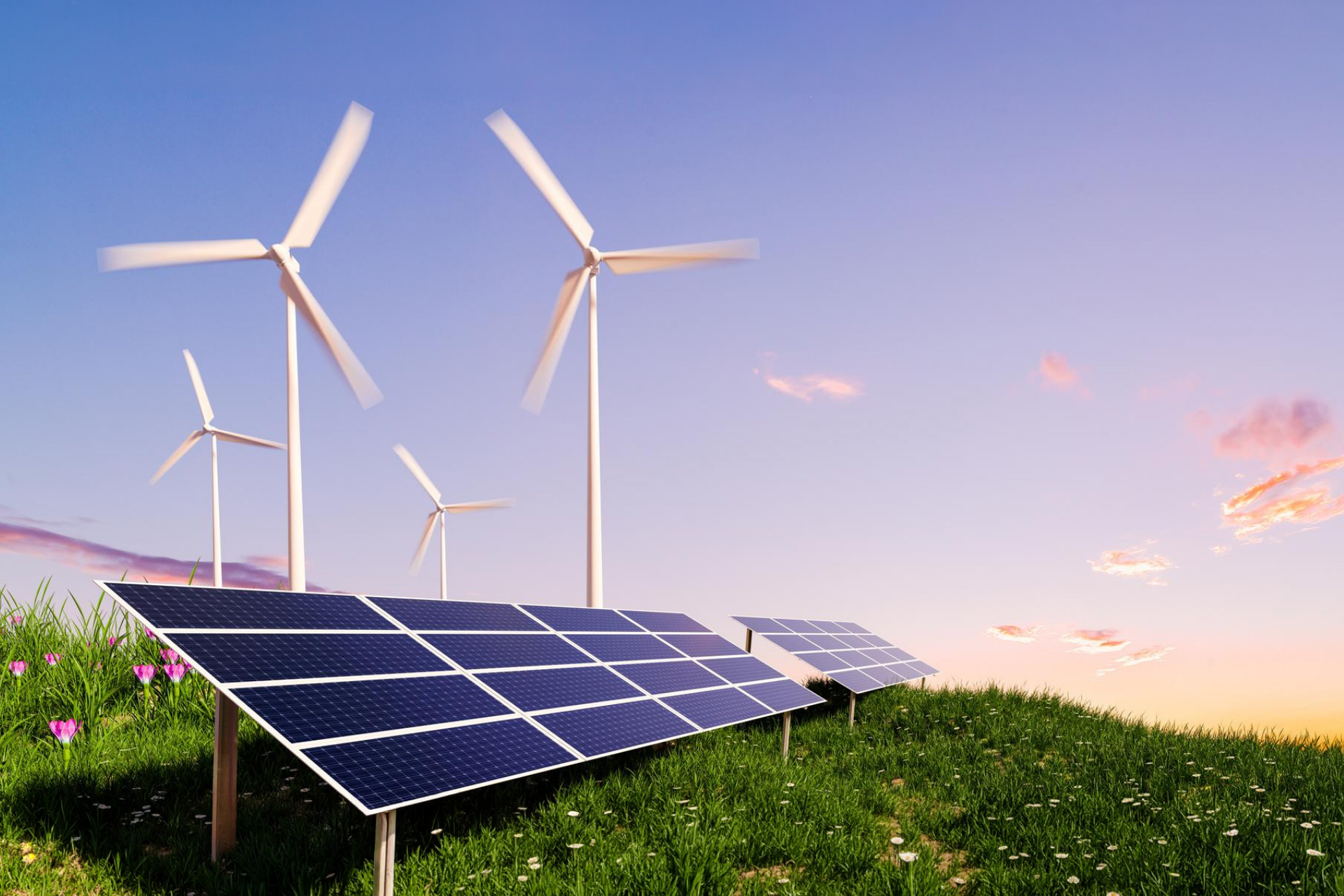
Solar panels scale quickly and cheaply. Wind farms require larger bets and longer timelines. But which sector is actually growing faster across Africa, and where should capital flow? Africa holds some of the world’s richest solar irradiation and strong wind corridors, yet its installed renewable base remains modest compared to potential. For investors scanning investment […]

Introduction Choosing impact over pure returns, or the other way round, changes everything. Not just how you deploy capital, but how you define success, patience, and even risk. Africa makes that choice sharper than most emerging regions due to its mix of high-growth sectors and persistent development gaps. The continent offers some of the world’s […]