
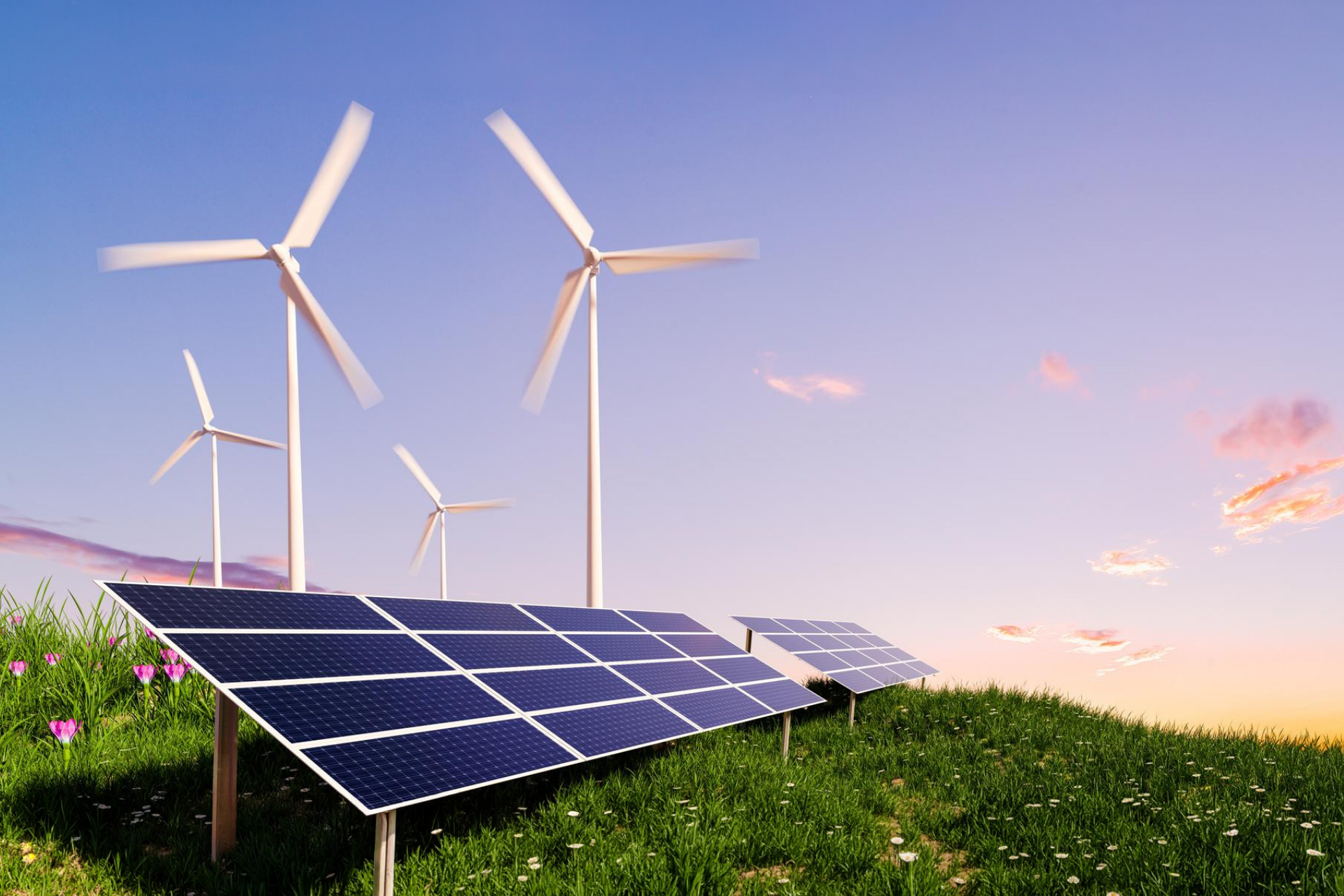
Solar panels scale quickly and cheaply. Wind farms require larger bets and longer timelines. But which sector is actually growing faster across Africa, and where should capital flow?
Africa holds some of the world’s richest solar irradiation and strong wind corridors, yet its installed renewable base remains modest compared to potential. For investors scanning investment opportunities in Africa, pace matters. Speed signals policy alignment, financing momentum, and execution capacity. Let’s break it down: growth rates, drivers, risks, and where energy sector investment in Africa is tilting right now.
Before we compare numbers, here’s what we mean in the African context.
Solar includes utility-scale photovoltaic plants, distributed rooftop systems, and off-grid or mini-grid solar solutions. In many African markets, especially in West and East Africa, off-grid solar and mini-grids play a central role in electrification, often supported by development finance institutions (DFIs).
Wind primarily refers to onshore wind farms connected to national grids. Offshore wind is still emerging but has technical potential along parts of North and West Africa, including Morocco and Senegal, according to the World Bank’s offshore wind assessments (World Bank, 2023).
Deployment models typically involve Independent Power Producers (IPPs), public–private partnerships, donor-backed facilities, and increasingly, corporate power purchase agreements (PPAs).
Insight: Solar is modular and decentralised; wind is grid-heavy and scale-driven.
Let’s start with solar, because the numbers here are hard to ignore.
According to IRENA’s Renewable Capacity Statistics 2024, Africa added roughly 3 GW of solar capacity in 2023 alone, accounting for the majority of new renewable additions on the continent. Solar now represents the fastest-growing renewable technology in Africa by annual capacity addition (IRENA, 2024).
Costs tell part of the story. IRENA (2023) reported that the global weighted average LCOE for utility-scale solar PV fell to about USD 0.049/kWh in 2022, with continued downward pressure from supply chain efficiencies and competitive procurement. Africa benefits directly from these cost curves, especially through competitively tendered projects in Egypt, South Africa, and Morocco.
The World Bank and IFC have also ramped up financing for distributed solar and mini-grids, especially under programs targeting energy access gaps in the Sahel and East Africa (World Bank, 2024). Solar’s modular nature means projects can move from financial close to commissioning far faster than wind.
Insight: Solar wins on speed and modular rollout, ideal for closing access gaps quickly.
Now wind, slower to start, but strategic where conditions align.
Wind capacity additions across Africa are smaller than solar’s, yet concentrated and impactful. IRENA (2024) shows wind additions of under 1 GW in 2023, largely driven by South Africa’s Renewable Energy IPP Procurement Programme (REIPPPP) and projects in Egypt and Morocco.
What wind lacks in speed, it often makes up in performance. Capacity factors in strong corridors, such as Kenya’s Lake Turkana region and Egypt’s Gulf of Suez can exceed 40%, according to the IEA (2023). That’s higher than many solar plants, translating into more consistent output for grid-scale supply.
However, wind requires robust transmission infrastructure and longer permitting timelines. Offshore wind potential exists , the World Bank (2023) identified technical offshore wind resources exceeding 30 GW in Morocco alone, but commercial deployment remains early-stage.
Insight: Wind scales with size and grid integration, powerful where transmission and policy align.
So, numbers side by side.
Solar is currently expanding faster in annual megawatt terms across most African markets.
Solar projects can reach financial close and commissioning in 12–24 months. Wind often stretches beyond that due to land acquisition, environmental impact assessments, and grid interconnection complexity (IEA, 2023).
Solar capital costs have fallen sharply over the past decade. Wind remains competitive in strong resource areas but typically demands higher upfront investment and grid reinforcement.
The African Development Bank (AfDB, 2024) reports that private clean energy investment in Africa has risen significantly since 2019, approaching USD 40 billion in 2024 across renewables and related infrastructure. A significant share has flowed into solar, particularly utility-scale PV and distributed access solutions.
Green bonds, blended finance, and DFI-backed guarantees are central to both sectors. However, solar’s smaller ticket sizes and shorter development cycles make it easier for impact funds and private equity to participate.
Both sectors face currency volatility, offtaker credit risk, and policy uncertainty. Wind projects are more exposed to grid curtailment risk in weak transmission networks. Solar, while quicker, faces saturation risks in markets with constrained grid capacity.
These trends define today’s leading investment opportunities in Africa, especially for energy sector investment in Africa targeting scalable deployment.
Verdict: Based on capacity growth and project velocity, solar is currently expanding faster, but wind leads where grid, scale, and policy allow premium, stable returns.
In Egypt, large-scale solar development continues under the Benban complex expansion and new tenders backed by multilateral financing, reinforcing solar’s dominance in North Africa (AfDB, 2024; IRENA, 2024).
In South Africa, recent REIPPPP bid windows have awarded both wind and solar projects, but wind projects remain larger in single-project scale, often exceeding 100 MW per site (South Africa Department of Mineral Resources and Energy, 2023).
These deals are typically financed through blended structures, commercial lenders alongside DFIs like the AfDB and IFC de-risking projects and signaling sustained business opportunities in Africa for EPC firms, investors, and infrastructure funds.
Insight: Solar projects are multiplying quickly; wind projects are fewer but heavier in capital and grid impact.
So, where should capital flow?
For UAE-based investors, cross-border participation requires compliance with UAE Ministry of Energy & Infrastructure guidelines and tax considerations under UAE Ministry of Finance and Federal Tax Authority rules, especially regarding overseas income structuring and double taxation treaties.
Blended finance remains critical to de-risk large wind builds.
Insight: Solar offers immediate scale; wind offers differentiated returns in mature corridors.
Before committing capital, assess:
Track KPIs: MW added, capacity factor, LCOE, time-to-FID, IRR, jobs created, and connections delivered.
In the battle of speed versus scale, solar is currently ahead across Africa. It’s adding more megawatts, faster, and attracting broader investor participation. Wind remains strategic, strong where policy, transmission, and resource align, but solar is leading the continent’s renewable surge.
For investors scanning Africa’s energy transition, the data points clearly: solar dominates growth today, while wind holds targeted, high-value pockets.
The information in this article is provided for general informational purposes only and does not constitute investment, financial, legal, or tax advice. While every effort has been made to ensure accuracy using reputable and recent sources, energy markets and regulatory environments across Africa can change rapidly. Readers and prospective investors should conduct independent due diligence and consult qualified professional advisors before making any investment decisions related to energy sector investment in Africa or other business opportunities in Africa. References to projects, policies, or regulatory frameworks are illustrative and do not represent endorsements or guarantees of performance.
Sources & Further Reading
Primary Data and Market Reports (2023–2025)
UAE Regulatory References (for cross-border investors)
Right now, the strongest plays sit in utility-scale solar, distributed solar and mini-grids, and selected onshore wind corridors. IRENA (2024) shows solar is leading new capacity additions, especially in Egypt, South Africa, Morocco, and parts of West Africa. Off-grid solar in the Sahel and East Africa also attracts heavy World Bank and AfDB backing because of its role in closing access gaps. For investors, the sweet spot often combines strong irradiation, bankable PPAs, and DFI-supported financing structures. What this really means is the best opportunities balance speed to market with reliable offtake.
Several forces are converging. First, Africa still has one of the world’s largest electricity access gaps, which creates structural demand for new generation capacity (World Bank, 2024). Second, solar and wind costs have dropped sharply over the past decade, making renewables competitive with new thermal builds in many markets (IRENA, 2023). Third, development finance institutions are actively de-risking projects through guarantees, blended finance, and concessional funding. Add rising corporate PPA demand and climate finance flows, and you get a clear trend: capital is moving where both impact and long-term power demand are growing.
In many markets, yes, but with conditions. Solar is currently the fastest-scaling renewable technology across Africa by annual capacity additions (IRENA, 2024), largely because it is modular, quick to deploy, and increasingly cost-competitive. It performs especially well in high-irradiance countries with improving procurement frameworks. That said, investors still need to assess grid capacity, currency exposure, and offtaker credit quality. Solar works best where policy is stable and transmission bottlenecks are manageable. In short: strong fundamentals, but disciplined project screening remains essential.
A handful of markets consistently lead the pack. South Africa remains the continent’s largest renewable market by pipeline and procurement activity under REIPPPP (DMRE, 2023). Egypt and Morocco continue to expand large solar and wind portfolios supported by competitive tenders and multilateral finance. Kenya stands out in East Africa for wind and geothermal integration, while countries such as Nigeria and Senegal are emerging solar growth markets. For investors tracking business opportunities in Africa, these countries typically offer the deepest pipelines and the most mature regulatory frameworks.
Renewables do more than add megawatts. According to the African Development Bank (2024), expanding clean power improves industrial productivity, reduces reliance on imported fuels, and supports job creation across construction, operations, and local supply chains. Off-grid solar and mini-grids also enable rural businesses, agriculture processing, and digital connectivity in underserved regions. The broader effect is economic resilience: more reliable electricity lowers business costs and unlocks new private sector activity. What this really means is that energy sector investment in Africa is increasingly tied to long-term growth, not just power generation.

Introduction Choosing impact over pure returns, or the other way round, changes everything. Not just how you deploy capital, but how you define success, patience, and even risk. Africa makes that choice sharper than most emerging regions due to its mix of high-growth sectors and persistent development gaps. The continent offers some of the world’s […]

Introduction Infrastructure is Africa’s backbone, but who pays for it decides how fast it gets built, who benefits, and whether it holds up over time. Roads, power plants, ports, water systems, fiber networks, they all hinge on financing choices. Public money brings scale and social intent. Private capital brings speed and discipline. Both matter, and […]
Africa is increasingly catching serious attention from investors around the world. For many countries, growth prospects remain strong: improving economic fundamentals, demographic tailwinds, rising consumption and infrastructure gaps make for a compelling growth narrative. But, along with potential comes volatility: currency swings, shallow markets, uneven regulation. That volatility forces a choice, do you try to […]