

Africa has always been a fragmented market in practice, even when the opportunity looked unified on paper. Different regulations, tariffs, and border inefficiencies made cross-border trade slower, riskier, and often expensive. That’s exactly the gap the African Continental Free Trade Area is trying to close.
What this really means is simple: Africa is moving from a collection of individual markets to something closer to a single, connected economic space. And that shift is starting to reshape how investors think about the continent.
Let’s break it down.
AfCFTA, launched in 2021 under the African Union, aims to create the largest free trade area in the world by number of participating countries. It brings together 50+ nations under a framework that reduces tariffs, simplifies customs procedures, and aligns trade regulations over time.
According to the World Bank, full implementation could increase intra-African trade by over 50% by 2030. That’s not just trade volume. It’s movement of capital, expansion of businesses, and entirely new regional supply chains.
Here’s where it gets interesting for investors.
Before AfCFTA, entering Africa often meant choosing one country at a time. Nigeria or Kenya. Ghana or South Africa. Each decision came with its own regulatory maze.
Now, investors are starting to think in corridors, not countries.
Instead of asking “Which market should I enter?”, the better question becomes: “How do I build across multiple markets efficiently?”
That shift opens up broader Business opportunities in Africa, especially for companies that rely on scale. Manufacturing, logistics, fintech, and consumer goods stand out here.
For example, a company can now produce in one country and distribute across several without facing the same tariff barriers as before. That alone changes cost structures and profitability models.

Policy alone doesn’t drive investment. Infrastructure does.
AfCFTA is pushing governments to improve border efficiency, digitize customs processes, and invest in transport corridors. Institutions like the African Development Bank and United Nations Economic Commission for Africa are actively supporting these developments.
The result is gradual, but visible:
This is critical because cross-border investment only works when goods, capital, and services can move without friction.
Africa’s urban population is expected to double by 2050. Cities like Lagos, Nairobi, and Accra are expanding fast, creating strong demand hubs.
AfCFTA strengthens this by connecting urban markets Africa across borders. Instead of isolated demand centers, we’re seeing networks of cities that can support regional distribution models.
For investors, that means:
Retail, e-commerce, and financial services benefit heavily here. A digital platform built in one country can now expand regionally with fewer barriers.
Here’s something that often gets overlooked.
AfCFTA isn’t just about big cities and large corporations. It’s also creating momentum in rural investment Africa, especially in agriculture and resource-based sectors.
Why? Because improved trade access increases the value of production in rural areas.
Farmers and agribusinesses are no longer limited to local demand. They can tap into regional markets where demand may be higher and prices more favorable.
This is where agricultural investment Africa becomes especially relevant.
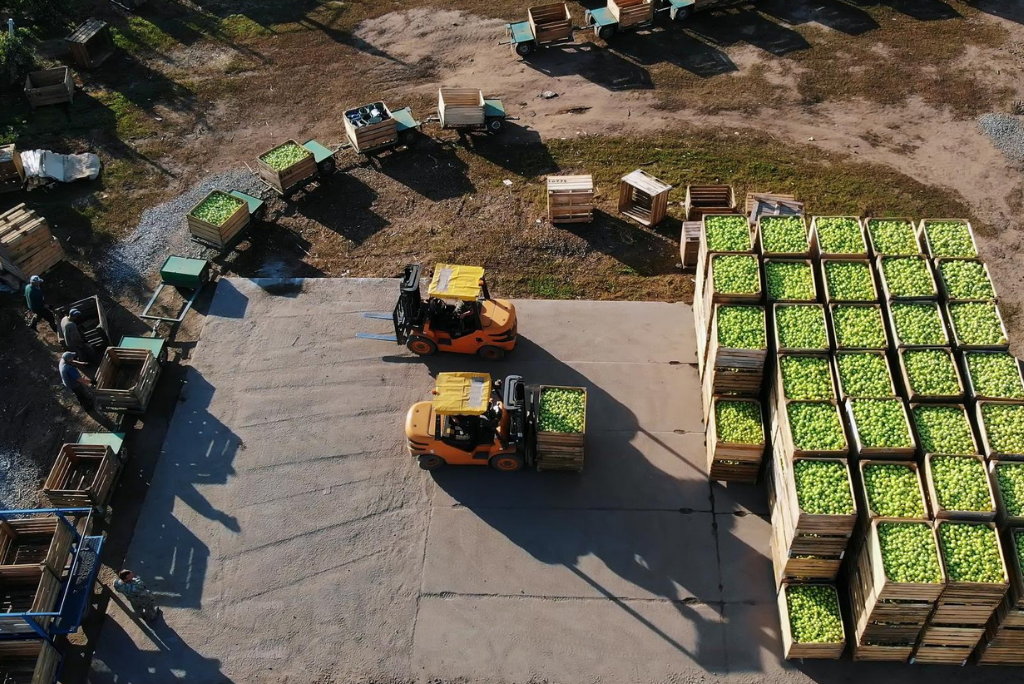
Agriculture accounts for a significant share of employment across Africa, yet much of it has remained low-value and locally focused.
AfCFTA changes that by enabling:
According to the World Bank and UNECA, improved trade integration could significantly boost agro-processing industries, reducing reliance on imports from outside the continent.
For investors exploring Investment opportunities in Africa, this creates a compelling case:
It’s not just farming anymore. It’s value chain buildings
Reduced Risk Through Market Diversification
One of the biggest barriers to investing in Africa has always been perceived risk. Political, regulatory, and currency risks vary widely across countries.
AfCFTA doesn’t eliminate these risks, but it dilutes them.
By enabling regional operations, investors can spread exposure across multiple markets instead of relying on a single economy. That creates more resilience.
Think of it this way:
That’s a major shift in how risk is managed on the continent.
It’s not all smooth progress.
AfCFTA is a long-term framework, not an overnight transformation. Several challenges remain:
Some borders are more efficient than others. Some policies are still evolving. Investors need to factor this into their strategies.
But here’s the key point: direction matters more than perfection. And the direction is clearly toward integration.

Understanding AfCFTA is one thing. Navigating it is another.
This is where organizations like CADI step in. The real opportunity isn’t just in knowing that markets are opening up. It’s in identifying where, when, and how to enter them.
CADI’s focus on regional insights, sector-specific opportunities, and investment pathways becomes especially relevant in an AfCFTA-driven environment.
Because the winners in this new landscape won’t be the ones who move first. They’ll be the ones who move informed.
AfCFTA is quietly reshaping Africa’s investment story.
It’s turning fragmented markets into connected systems. It’s expanding demand beyond borders. And it’s creating new layers of opportunity across urban and rural economies alike.
For investors, the shift is clear:
Africa isn’t becoming a single market overnight. But for the first time, it’s moving in that direction with intent.
And that changes everything.
Disclaimer
This article is intended for informational and educational purposes only and does not constitute financial, legal, or investment advice. While the insights are based on data and reports from credible institutions such as the World Bank, African Development Bank, United Nations Economic Commission for Africa, and the African Union, market conditions, policies, and regulations may change over time.
Readers are advised to conduct their own due diligence and consult with qualified financial, legal, or policy advisors before making any investment or business decisions related to African markets. CADI does not guarantee the accuracy, completeness, or timeliness of the information presented and shall not be held responsible for any decisions made based on this content.
Sources
1.World Bank – AfCFTA Overview
https://www.worldbank.org/en/topic/trade/publication/the-african-continental-free-trade-area
2. World Bank – AfCFTA Report (Full Study)
https://documents.worldbank.org/en/publication/documents-reports/documentdetail/099122624180034339
3. World Bank – AfCFTA Press Release (Poverty & Trade Impact)
https://www.worldbank.org/en/news/press-release/2022/06/30/free-trade-pact-could-help-lift-up-to-50-million-africans-from-extreme-poverty
4. United Nations Economic Commission for Africa (UNECA) – AfCFTA Insights
https://www.uneca.org/stories/afcfta-is-africa%E2%80%99s-master-plan-for-renewal
5. UNECA – Economic Report on Africa (AfCFTA Benefits)
https://www.uneca.org/stories/afcfta-benefits-will-be-across-sectors-%E2%80%93-economic-report-on-africa-2025
6. African Union – AfCFTA Information
https://au.int/en/ti/afcfta/about
7. African Development Bank – Trade & Regional Integration
https://www.afdb.org/en/topics-and-sectors/initiatives-partnerships/african-continental-free-trade-area-afcfta
8. UNCTAD – Economic Development in Africa Report
https://unctad.org/publication/economic-development-africa-report-2024
9. Brookings Institution – AfCFTA & Infrastructure
https://www.brookings.edu/articles/reaping-the-benefits-of-the-afcfta-strengthening-transport-services-and-infrastructure-for-growth/
10. tralac (Trade Law Centre) – Intra-African Trade Analysis
https://www.tralac.org/news/article/13258-boosting-intra-african-trade-implications-of-the-african-continental-free-trade-area-agreement-african-trade-report-2018.html
The African Continental Free Trade Area is a continent-wide trade agreement designed to reduce tariffs, simplify customs procedures, and improve regulatory alignment across African countries.
For investors, this changes the game. Cross-border investments become more viable because businesses can operate across multiple countries with fewer trade barriers. What used to be isolated markets are gradually becoming part of a connected system, making regional expansion more practical and cost-effective.
AfCFTA expands market access. Instead of targeting one country, investors can now tap into a broader regional market.
This opens up new Business opportunities in Africa by:
It also allows businesses to scale faster. A product or service launched in one country can now expand into neighboring markets with fewer restrictions, making growth strategies more efficient.
Several sectors stand to gain, but a few stand out clearly:
These sectors benefit because they rely heavily on scale, movement, and market access, all of which AfCFTA is improving.
AfCFTA supports development by strengthening intra-African trade and encouraging industrialization.
According to the World Bank and United Nations Economic Commission for Africa, the agreement can:
It also supports rural investment Africa by connecting producers in rural areas to wider markets, increasing income potential and economic activity beyond major cities.
Yes, gradually.
AfCFTA improves investor confidence by creating a clearer, more predictable trade environment. While challenges still exist, the direction of policy is encouraging.
Foreign investors are particularly interested in:
This is driving growing interest in Investment opportunities in Africa, especially in sectors aligned with regional trade and infrastructure.
The benefits are widespread, but countries with strong infrastructure, strategic location, or diversified economies tend to gain faster advantages.
Examples include:
That said, AfCFTA is designed to be inclusive. Over time, even smaller or less-developed economies can benefit as trade networks expand and infrastructure improves across the continent.

Introduction Africa’s investment story is no longer driven by demographics alone. Regulatory reform is increasingly reshaping the continent’s risk-reward profile. What is quietly reshaping the continent’s risk-reward profile is regulatory change. Across multiple markets, governments are simplifying approvals, digitizing public services, and aligning trade rules. For investors, that shift matters more than headline growth rates. […]

Introduction Africa’s megacities grab the headlines, but some of the continent’s most compelling opportunities are quietly taking shape far from the urban skyline. Yes, the continent is urbanizing fast. The World Bank (2024) notes that Africa’s urban population is expected to nearly double by 2050. Yet today, a large share of Africans still live and […]

Introduction Africa isn’t just building financial systems, it’s rewriting how finance reaches millions who were never banked in the first place. For decades, large segments of the population operated outside formal financial networks, relying on cash and informal savings groups. That reality is shifting fast. Traditional banks are expanding their footprint. Fintech players are scaling […]