
Africa contributes roughly 4% of global greenhouse gas emissions. Yet nine of the ten countries most vulnerable to climate change are on the continent. That mismatch between contribution and consequence is not just an ethical problem. It is increasingly a financial one.
Floods in Central Africa, worsening droughts across the Sahel, cyclones battering coastal communities in the south, these are not isolated weather events. They are compounding shocks that erode infrastructure, disrupt agricultural output, and strain sovereign balance sheets. For investors, that risk profile is no longer background noise. It has moved to the front of the conversation.
What’s changing now is how that conversation is evolving. Climate risk used to be a disclosure box to check. Today, it is reshaping capital allocation strategies, restructuring how development banks deploy funds, and opening up new investment frontiers across the continent’s most dynamic sectors.
Agriculture employs between 50 and 60 % of the African workforce in most sub-Saharan economies. Shifts in rainfall patterns, prolonged droughts, and erratic growing seasons directly compress food production and rural incomes. That’s not a future risk, it’s a present one.
Water stress is equally acute. Several major African cities already face seasonal water shortages, and groundwater depletion is accelerating in parts of North and East Africa. Urban infrastructure built for historical climate conditions is struggling to keep pace with the new normal.
The economic bill is significant. The African Development Bank estimates that Africa’s adaptation financing needs run to $277 billion annually, yet the continent currently receives only around $30 billion per year for climate adaptation. That gap, between what’s needed and what’s arriving, is both a vulnerability and an opportunity.

Climate change investment trends in Africa have historically been shaped by external capital flowing in from multilateral institutions. That remains true, but the nature of those flows is becoming more sophisticated.
The AfDB allocated $5.5 billion to climate finance in 2024 alone, nearly half of its total annual approvals. More than half of that was directed at adaptation projects: resilient agriculture, water infrastructure, climate-proofed transport networks. The share of AfDB projects designed with climate considerations grew from 77% in 2016 to 98% in 2024.
Globally, multilateral development banks hit a record $137 billion in climate finance in 2024, with private co-financing rising 33% year-on-year to $134 billion. The direction of travel is clear. But Africa’s share of that capital remains disproportionately small relative to its climate exposure and its needs.
Private ESG-oriented funds have been expanding their coverage of African markets, particularly in renewable energy and green infrastructure. Climate-aligned investment is increasingly seen not as a concession to ethics, but as a hedge against the physical and regulatory risks that come with climate-exposed business models.
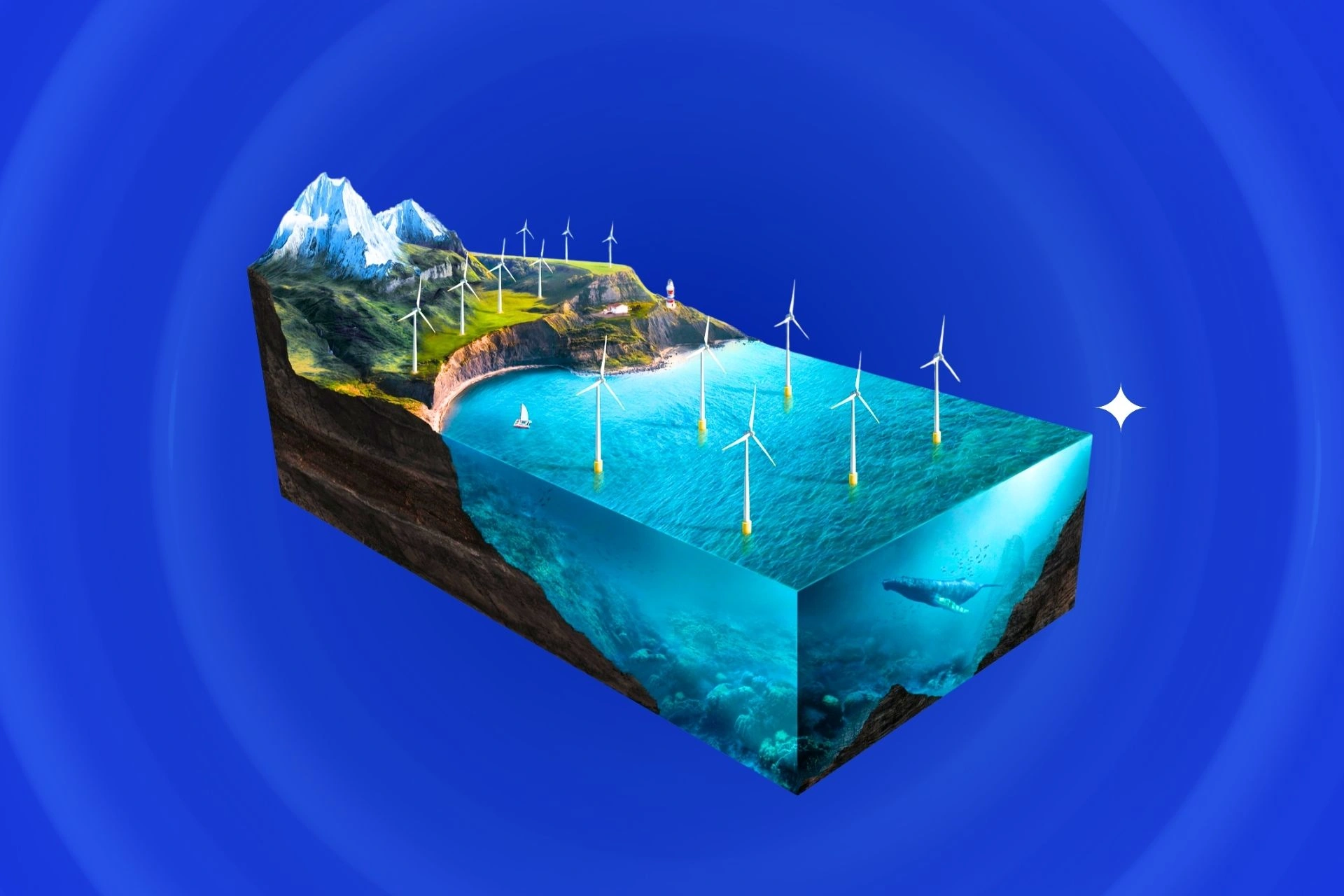
Africa holds approximately 60% of the world’s best solar resources but has historically captured only a fraction of global clean energy investment. In 2023, renewable energy investment on the continent reached a record $15 billion, more than double 2022 levels, yet this still represented just 2.3% of the global total.
The gap between potential and deployment is striking. Africa’s estimated solar capacity potential exceeds 480,000 GW. Wind energy adds another 70,000+ GW of theoretical capacity. Even accounting for grid infrastructure constraints, the available resource base far exceeds what current installed capacity uses.
Countries like Morocco, Egypt, and South Africa are demonstrating what the right combination of policy clarity and private capital can achieve. Morocco’s Noor Ouarzazate complex remains one of the world’s largest concentrated solar power installations. Egypt more than doubled its renewable capacity between 2015 and 2024. Kenya has built a geothermal sector that places it seventh globally in installed capacity.
Off-grid and distributed solar is another important dimension. Pay-as-you-go solar models are connecting millions of households and small businesses across East and West Africa who are not waiting for the grid to arrive.
With climate disruption hitting food systems hardest, agriculture is both the most exposed and most investable sector for climate resilience. Precision irrigation, drought-resistant seed varieties, cold-chain logistics, and digital agricultural platforms are attracting both development finance and commercial capital. The AfDB’s Climate Action Window has prioritized giving 20 million farmers access to climate-resilient technologies, a target that points to the scale of the addressable market.
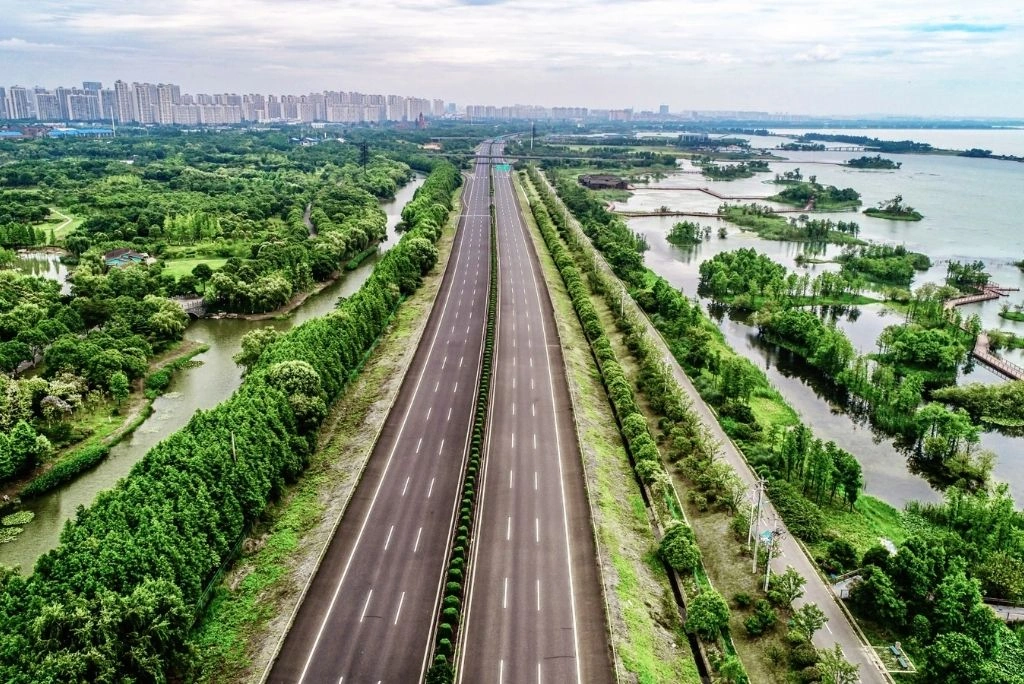
Roads, bridges, ports, and urban drainage systems designed for yesterday’s climate are being tested by today’s weather. The infrastructure replacement and climate-proofing cycle creates significant long-term capital opportunities. The AfDB’s Africa Adaptation Acceleration Program is working to climate-proof $25 billion worth of existing investments, which itself signals the depth of the need.
Water infrastructure from municipal treatment systems to irrigation networks and transboundary management schemes is underfunded and increasingly critical. Impact investors and development finance institutions are beginning to treat water security as a tier-one investment theme across the continent.
Climate finance flows to Africa nearly doubled between 2019/20 and 2021/22, reaching over $43 billion annually. But that figure only covers about 23% of what Africa’s own nationally determined contributions (NDCs) require. For mitigation specifically, current investment meets just 18% of estimated needs. For adaptation, 20%.
To meet its 2030 climate goals, Africa needs to quadruple annual climate finance flows. That is not a marginal adjustment, it is a structural transformation of how global capital is directed toward the continent.
The investment gap is also unevenly distributed. The ten most climate-vulnerable African nations receive only 11% of total climate finance flows. Private capital is even more concentrated: ten countries captured 76% of private climate investment. The disparity between where climate risks are highest and where capital flows remain is one of the defining financing challenges of the decade.
Energy remains the anchor. Without a reliable, clean energy supply, every other sector, agriculture, health, water, logistics operates at reduced efficiency. Clean energy access is foundational to climate resilience.
Agriculture and food systems are attracting growing interest from both impact-focused and commercial investors who see climate adaptation as a business imperative, not a charitable add-on.
Infrastructure, particularly transport, urban drainage, and coastal defenses represents large-ticket, long-duration investment opportunities suited to patient capital.
Green finance and fintech are enabling new instruments: green bonds, climate risk insurance products, carbon market participation, and mobile-enabled climate finance disbursement. Several African financial institutions are now actively developing climate-linked financial products targeting small businesses and smallholder farmers.

Investor confidence in African climate markets is highly sensitive to policy quality. Countries with clear renewable energy procurement frameworks, consistent permitting processes, and credible NDC targets attract capital. Those without them don’t.
The African Continental Free Trade Area (AfCFTA) has the potential to create the regional market scale that makes certain clean energy and green infrastructure projects commercially viable. Regional power pooling agreements could unlock much larger renewable energy investments by allowing countries to export surplus clean power across borders.
At the national level, Egypt’s feed-in tariff reforms, South Africa’s independent power producer program, and Kenya’s long-standing geothermal policy framework are examples of what policy consistency can do for investment volumes. They are also the exception rather than the rule.
Climate change investment trends in Africa are ultimately shaped by two forces pulling in opposite directions: the urgency created by physical climate risk, and the friction created by regulatory unpredictability. Progress happens where governments reduce that friction deliberately.
This is not a risk-free landscape. Several obstacles consistently appear in investor assessments:
Regulatory inconsistency remains a top concern. Policy reversals, retroactive changes to power purchase agreements, and currency controls create uncertainty that raises the cost of capital significantly.
Infrastructure gaps compound the challenge. Building a solar farm is one thing; connecting it to a functioning grid at a bankable tariff is another. Grid infrastructure investment has lagged behind renewable generation capacity in several key markets.
Financing barriers, particularly for smaller deals and frontier markets, are real. High cost of capital, driven partly by currency risk, partly by sovereign risk perceptions, makes many climate projects unviable without concessional co-financing.
Execution risk in project development, land rights, and local procurement can stretch timelines well beyond original projections.
None of these challenges are insurmountable. But they require investors to do genuine due diligence to understand not just the sector opportunity but the specific country context.
Here is what gets lost in the infrastructure-gap and policy-risk discussion: Africa’s climate transition is not optional. A continent with the world’s fastest-growing population, the youngest demographic profile, and the highest climate vulnerability has no choice but to invest in resilience. The question is who builds it, who finances it, and who benefits.
Investors who understand that climate resilience is an economic necessity, not a philanthropic gesture are the ones positioning themselves for the long game. The sustainable investment in Africa thesis is not built on idealism. It is built on the straightforward observation that climate-exposed economies will require massive capital deployment, and that deployment creates returns across energy, agriculture, infrastructure, and financial services.
The investment opportunities in Africa that will matter most over the next two decades are not the ones that ignore climate risk. They are the ones that price it correctly and build for it deliberately.
Africa’s relationship with climate change is one of profound inequity. The continent has contributed the least to the problem and stands to bear the greatest cost. That reality creates a financing obligation for the global community and a set of investment opportunities that forward-thinking capital should not ignore.
The numbers point to scale: hundreds of billions of dollars in annual needs, a renewable energy resource base that is unmatched globally, and a young, urbanizing population that will drive energy and food demand for decades. The barriers are real, but so is the momentum.
Investors who engage seriously with Africa’s climate transition, who understand local market context, who work with policy frameworks rather than against them, and who take a long-term view will find that climate resilience and financial return are not competing objectives. On this continent, increasingly, they are the same objective.
Disclaimer: The content in this article is for informational purposes only and does not constitute financial, investment, or legal advice. Climate conditions, market dynamics, and investment environments vary significantly across African regions and sectors. Readers are advised to conduct thorough due diligence and consult qualified financial or investment professionals before making any investment decisions.
Sources & References
1. African Development Bank — Climate Action & Financing (2024 data: $5.5B allocation, 77%→98% project coverage, $277B adaptation gap)
https://www.afdb.org/en/cop30/focus-africa/african-development-bank-groups-climate-action-and-financing
2. African Development Bank — Climate Vulnerability & $7–$15B Annual Economic Loss https://www.afdb.org/en/cop28/focus-africa
3. Climate Policy Initiative — Landscape of Climate Finance in Africa 2024 (48% increase in flows, 23% NDC coverage, 18%/20% mitigation/adaptation gaps, private finance concentration) https://www.climatepolicyinitiative.org/publication/landscape-of-climate-finance-in-africa-2024/
4. UNDP — Climate Finance in Africa: Overview, Challenges & Opportunities (NDC financing needs, $277B figure, adaptation gap data)
https://www.undp.org/africa/publications/climate-finance-africa-overview-climate-finance-flows-challenges-and-opportunities
5. IEA — Clean Energy Investment for Development in Africa (60% of world’s best solar resources, 600M without electricity, energy investment needs)
https://www.iea.org/reports/clean-energy-investment-for-development-in-africa/executive-summary
6. IEA — World Energy Investment 2024, Africa Section (energy investment breakdown, clean energy gap) https://www.iea.org/reports/world-energy-investment-2024/africa
7. BloombergNEF — Africa Power Transition Factbook 2024 (record $15B renewable investment in 2023, 2.3% global share, deployment targets)
https://about.bnef.com/insights/finance/africas-renewables-targets-will-be-hard-to-achieve-despite-a-doubling-of-investment-bloombergnefs-latest-report-finds/
8. World Meteorological Organization (WMO) — State of the Climate in Africa 2023 (climate impacts, GDP losses, extreme weather documentation)
https://wmo.int/publication-series/state-of-climate-africa-2023
9. Joint MDB Report via AfDB — Record $137B Global Climate Finance in 2024 (MDB totals, 33% private finance increase)
https://www.afdb.org/en/news-and-events/press-releases/multilateral-development-banks-hit-record-137-billion-climate-finance-driving-sustainable-development-worldwide-86747
Climate change investment trends in Africa are shifting significantly as physical risks become measurable financial risks. Investors are repricing exposure to climate-vulnerable sectors, particularly agriculture, coastal infrastructure, and water-dependent industries. At the same time, capital is accelerating into renewables, climate-smart agriculture, and green infrastructure. The AfDB’s climate finance allocation growing from 41% to 49% of total approvals between 2021 and 2024 reflects how central climate has become a mainstream African investment strategy.
The most substantive investment opportunities in Africa related to climate fall across renewable energy (solar, wind, geothermal, hydro), climate-smart agriculture, resilient infrastructure, water management systems, and green finance instruments. Africa holds 60% of the world’s best solar resources yet captures only 2.3% of global renewable investment, that gap defines both the challenge and the opportunity. Off-grid energy, pay-as-you-go solar platforms, and climate risk insurance are growing subsectors attracting both commercial and development capital.
Energy, agriculture, water infrastructure, and green transport are the core sectors. Financial services, particularly green bonds, climate-linked insurance products, and mobile fintech platforms are also growing in importance as enablers of broader climate finance flows.
Policy quality is one of the most significant determinants of where private capital flows. Clear procurement frameworks, consistent permitting, and credible NDC targets lower the cost of capital and attract investment. Regulatory inconsistency has the opposite effect, raising financing costs and deterring long-term commitments.
Sustainable investment in Africa is no longer a niche strategy, it is becoming the baseline for development finance across the continent. Climate-aligned capital directly addresses Africa’s most acute economic vulnerabilities: energy poverty affecting over 600 million people, food insecurity driven by climate-disrupted agriculture, and water stress threatening urban and rural communities alike. Multilateral institutions are increasingly requiring climate criteria in project design; private investors are following that signal. Sustainable investment, done with depth and local knowledge, builds the infrastructure base that underpins long-term economic growth.
Through a combination of multilateral development bank financing, impact investment funds, green bonds, blended finance structures, and direct private equity in sectors like renewable energy and agritech. The AfDB’s Climate Action Window and the Africa Adaptation Acceleration Program represent two of the largest structured mechanisms currently channelling capital toward frontline resilience needs.

Walk through an industrial park outside Nairobi and then spend an afternoon in a fintech office in Lagos, and you get two very different pictures of where Africa’s growth is coming from. One is stacked with pallets, packaging lines, and freight schedules. The other runs on laptops, cloud servers, and mobile transaction data. Both are […]

Walk into an investment conference in Nairobi, Lagos, or Cairo this year and the tone has shifted. Investors are no longer asking whether Africa is worth watching. They are asking which sector, which corridor, and which partner will get them in early. Africa’s investment landscape is evolving quickly, shaped by economic reforms, technological innovation, infrastructure […]
Africa’s investment story looks different in 2026 than it did five years ago. Growth is broader, capital is more selective, and the countries drawing serious long-term attention are the ones backing up their pitch with actual policy reform rather than promises. The continent’s real GDP growth accelerated to 4.2% in 2025, up from 3.1% the […]