
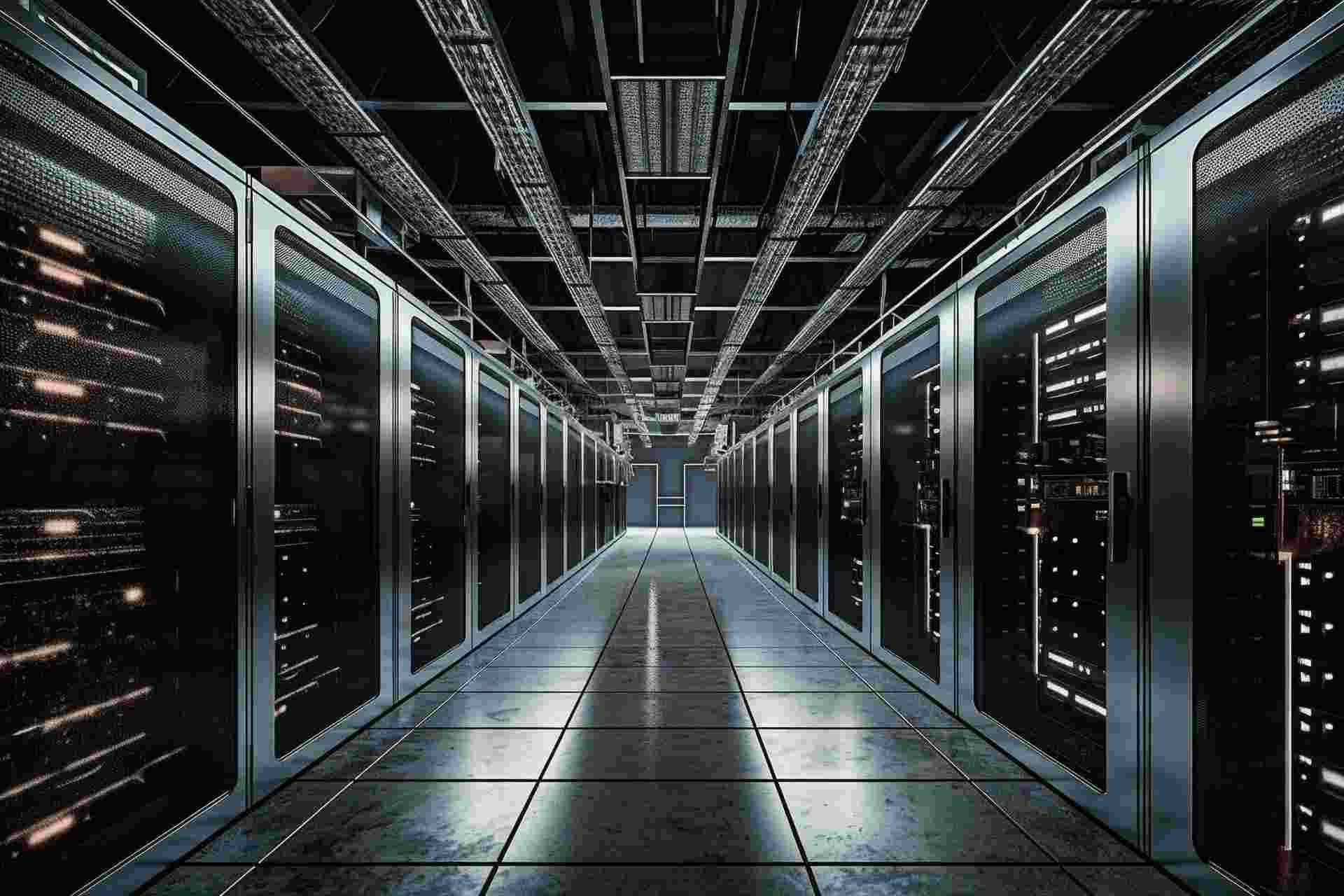
Nigeria’s IT sector is growing at an exponential rate. From innovative startups tackling real-world problems to a growing pool of tech talent, the country is rapidly positioning itself as a leader in Africa’s digital revolution. Now, Nigeria is taking a massive leap forward with the announcement of a state-of-the-art data center boasting a whopping 1.4 petabytes of storage capacity. That’s a lot of data. Imagine storing all the information in the Library of Congress – ten times over – that’s the kind of information this data center can hold.
Think of a data center as the digital backbone of a nation. It’s where critical information is stored and processed, from government records to financial transactions to personal data. Having a secure and reliable data center is essential for any country that wants to thrive in the digital age. Here’s how this massive data center will benefit Nigeria:
The new data center will provide a secure environment for storing sensitive information. This will help to build trust in the digital economy and encourage more people to participate.
The availability of reliable data storage will be a major boost for Nigeria’s tech sector. Startups and established companies alike will have access to the infrastructure they need to develop innovative new products and services.
The data center will allow the Nigerian government to store and manage its data more efficiently. This can lead to improved public services and better decision-making.
By having its own data center, Nigeria will be less reliant on foreign providers. This will give the country greater control over its data and ensure its privacy.
Nigeria’s investment in its digital infrastructure is a clear signal of the country’s commitment to technological advancement. This presents a tremendous opportunity for investors looking to invest in Africa.
Nigeria is Africa’s most populous country, with a rapidly growing middle class. This creates a massive potential market for tech companies.
Nigeria has a young and talented population, many of whom are eager to embrace technology. This provides a strong pool of potential employees for tech companies.
The Nigerian government is actively supporting the development of the tech sector. This includes providing funding, tax breaks, and other incentives for tech companies.
Nigeria’s massive data center is a symbol of the country’s ambitious plans for the future. It’s a testament to the growing strength of Nigeria’s tech sector and a signal that the country is ready to take its place on the global stage. If you are looking for lucrative business opportunities in Africa, then this is it.
1. What is the significance of Nigeria launching a 1.4-petabyte data center?
The launch of a 1.4-petabyte data center is a major milestone for Nigeria, as it signals the country’s commitment to digital infrastructure development and its ambition to become a regional tech hub.
2. How does a 1.4-petabyte data center compare to other data centers in Africa?
A 1.4-petabyte data center is one of the largest in Africa, highlighting Nigeria’s growing digital capacity and its ability to attract major investments in its tech infrastructure.
3. What is a petabyte, and how much data can 1.4 petabytes store?
A petabyte is a unit of digital storage equal to one quadrillion bytes. 1.4 petabytes can store an enormous amount of data, equivalent to approximately 1.4 million DVDs or 1.4 billion high-resolution images.
4. How will the data center impact Nigeria’s digital economy?
The data center will have a significant impact on Nigeria’s digital economy by providing a secure and reliable infrastructure for storing and processing data. This will attract more businesses and investments to the country and boost its digital capabilities.
5. When is the data center expected to be fully operational?
The exact timeline for the data center’s completion is not publicly available, but it is expected to be fully operational within the next few years. The project is likely to be phased, with different sections of the data center becoming operational at different times.

Walk through an industrial park outside Nairobi and then spend an afternoon in a fintech office in Lagos, and you get two very different pictures of where Africa’s growth is coming from. One is stacked with pallets, packaging lines, and freight schedules. The other runs on laptops, cloud servers, and mobile transaction data. Both are […]

Walk into an investment conference in Nairobi, Lagos, or Cairo this year and the tone has shifted. Investors are no longer asking whether Africa is worth watching. They are asking which sector, which corridor, and which partner will get them in early. Africa’s investment landscape is evolving quickly, shaped by economic reforms, technological innovation, infrastructure […]

Africa’s investment story looks different in 2026 than it did five years ago. Growth is broader, capital is more selective, and the countries drawing serious long-term attention are the ones backing up their pitch with actual policy reform rather than promises. The continent’s real GDP growth accelerated to 4.2% in 2025, up from 3.1% the […]