
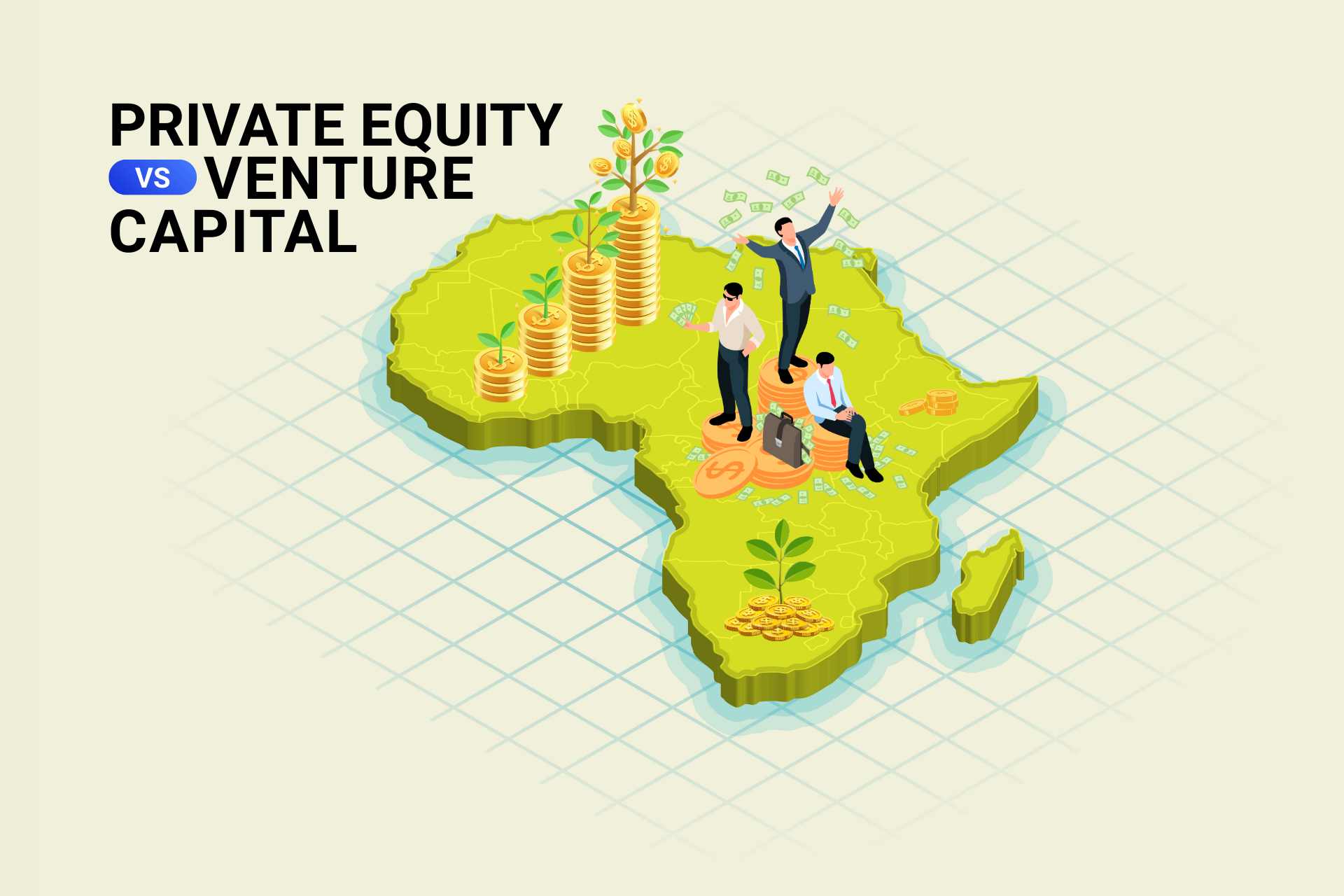
Private equity and venture capital are two very different ways of funding businesses in Africa. Private equity backs established companies that need capital to grow, fix gaps, or scale. Venture capital backs young startups chasing big ideas and rapid expansion. Both fuel growth, but they serve different stages, different risks, and different ambitions.
Investment opportunities in Africa are evolving. In 2023, the continent attracted approximately $4.5 billion in venture capital, reflecting a growing appetite for innovation-driven growth. However, not all investments are created equal. Private equity (PE) and venture capital (VC) are distinct paths, each playing a unique role in Africa’s economic development.
Understanding the difference isn’t just academic; it’s practical. Whether you’re a startup founder, an investor, or a policymaker, knowing which funding route aligns with your goals can make all the difference.
Private Equity (PE): PE firms invest in established companies, often those that are undervalued or underperforming. They typically acquire a controlling stake, restructure operations, and aim to sell at a profit within a few years. PE often targets sectors like infrastructure, energy, and manufacturing, promoting more business opportunities in Africa.
Venture Capital (VC): VC focuses on startups and early-stage companies with high growth potential. Investments are usually smaller, and the risk is higher. In Africa, VC is prevalent in tech-driven sectors such as fintech, healthtech, and agritech.

| Aspect | Private Equity (PE) | Venture Capital (VC) |
| Investment Stage | Established, mature companies | Early-stage startups |
| Investment Size | Large (often $10M+) | Smaller (typically <$10M) |
| Risk & Return | Lower risk, moderate return | Higher risk, high potential return |
| Ownership | Majority control | Minority stake |
| Typical Sectors | Infrastructure, energy, manufacturing | Tech (fintech, healthtech, agritech) |
| Exit Strategy | Sale, IPO, recapitalization | Acquisition, IPO |
Insight: PE builds scale; VC builds innovation.
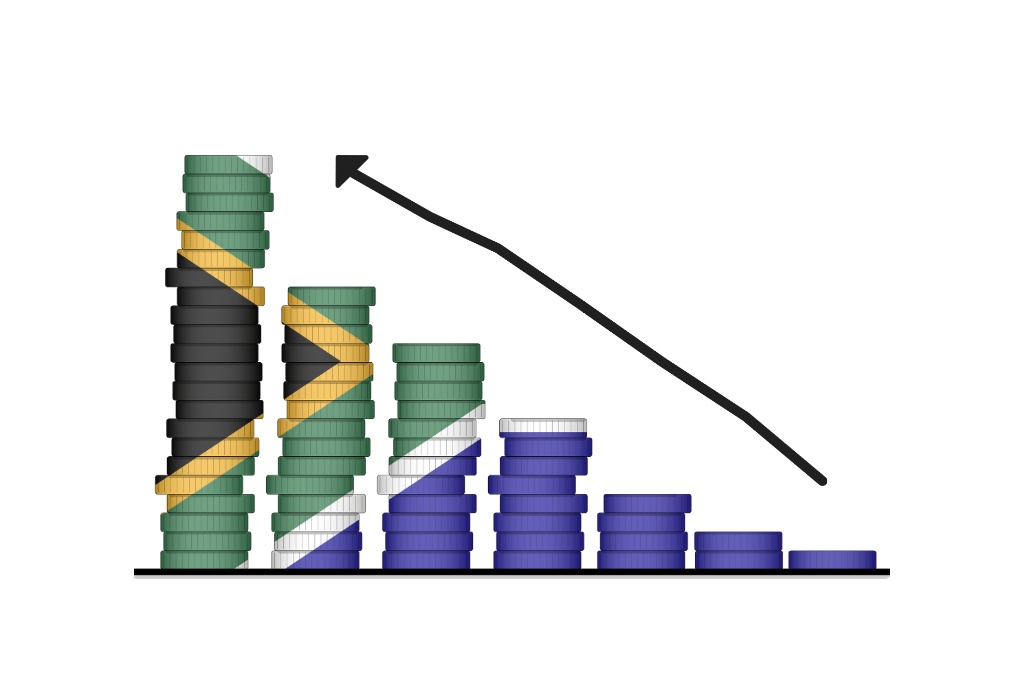
PE has found fertile ground in Africa’s infrastructure and energy sectors. For instance, in 2023, PE firms were actively involved in large-scale projects across Southern Africa, particularly in energy and infrastructure. These sectors require significant capital and long-term commitment, aligning well with PE’s investment profile.
However, challenges persist. Macroeconomic factors, such as currency volatility and political instability, have impacted investor returns. Between 2014 and 2024, African PE achieved average net internal rates of return (IRRs) of around 8–12%, considerably lower than China’s and India’s approximate 12% annual returns and the US ~15%.
VC is booming in Africa’s tech hubs. In 2023, the continent attracted $4.5 billion in VC investment, with fintech and agritech leading the charge. This surge is driven by a young, tech-savvy population and increasing mobile penetration.
Yet, the VC landscape isn’t without its hurdles. The number of VC deals in Africa decreased by 31% year-on-year in 2023. Challenges like regulatory hurdles, scalability issues, and a lack of exit opportunities have tempered the sector’s growth.
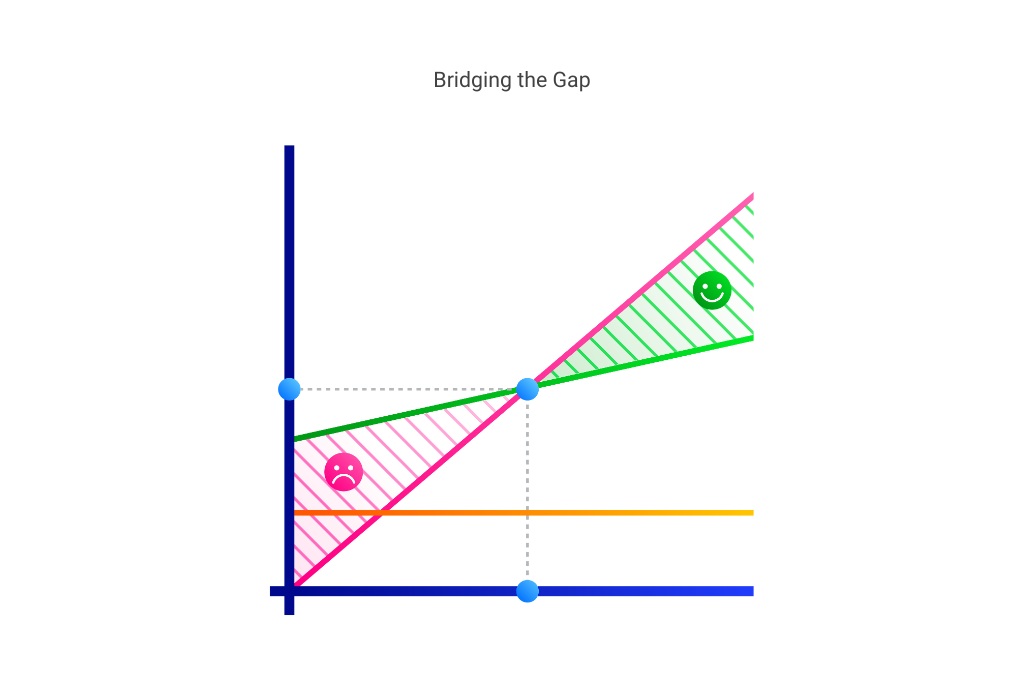
Interestingly, the lines between PE and VC are blurring. Some PE firms are venturing into early-stage investments, while certain VC firms are considering later-stage funding. This convergence is partly due to the challenges startups face in transitioning from VC to PE funding, often due to differing valuation methodologies and a lack of communication between investors.
Africa doesn’t need to choose between PE and VC; it needs both. The future lies in blended finance models, where development finance institutions, private investors, and governments collaborate to de-risk investments and unlock capital. Regional funds are also emerging, bridging the gap between PE and VC, and fostering a more integrated investment ecosystem.
As markets mature, there’s a growing emphasis on impact investing and sustainable development. Investors are increasingly looking for opportunities that offer both financial returns and positive social outcomes.
Private equity and venture capital each play a vital role in Africa’s growth story. PE builds scale, while VC fuels innovation. Understanding which model aligns with your business stage and goals is crucial.
If you’re looking to invest in Africa, knowing how each model fits your objectives can make all the difference.
Disclaimer:
The information provided in this blog is for informational and educational purposes only. While we strive to ensure the accuracy and reliability of the data cited from reputable sources such as AVCA, Partech, Preqin, and the African Development Bank, investment outcomes can vary, and past performance is not indicative of future results. This content does not constitute financial, investment, or legal advice. Readers should consult qualified professionals before making any investment decisions.
Sources:
Venture Capital in Africa
Private Equity in Africa
Development Finance and Investment Trends
1. Is it better to work in private equity or venture capital?
It depends on what drives you. If you like turning around established businesses, optimizing operations, and working closely with management teams, private equity might suit you better. You’ll deal with larger deals, deeper due diligence, and long-term strategic planning.
Venture capital, on the other hand, is more about spotting early potential, backing startups that could become tomorrow’s success stories. It’s fast-paced, creative, and risk-heavy. In Africa, where innovation ecosystems are still expanding, VC roles tend to involve more hands-on mentoring and ecosystem building.
2. Which is safer: private equity or venture capital investments in Africa?
Private equity is generally safer because it invests in mature companies with proven cash flows and assets. The risk of total loss is lower, though returns may also be steadier.
Venture capital takes bigger swings, investing in early-stage startups with unproven models. The upside can be massive, but so can the risk. In Africa, where exit options are fewer and markets can be volatile, PE offers more stability, while VC attracts those willing to bet on long-term innovation.
3. In which sectors does VC perform better vs PE in Africa?
Venture capital thrives in technology-driven sectors, fintech, healthtech, edtech, and agritech, where innovation can scale fast with minimal infrastructure.
Private equity performs better in capital-intensive sectors like energy, logistics, real estate, and manufacturing, areas that demand heavy investment and operational restructuring.
4. How do market conditions in Africa affect PE vs VC performance?
Macroeconomic shifts, from currency swings to political changes, affect both, but in different ways.
PE deals, tied to long-term infrastructure or industrial investments, feel the pinch of inflation and policy uncertainty but benefit from tangible assets. VC deals, often dollar-backed and tech-driven, are more vulnerable to market sentiment and funding cycles.
When liquidity tightens globally, VC tends to slow first. PE, with its longer investment horizon, weathers turbulence a bit better, though returns may still soften.
5. What are the risks of private equity and venture capital in African markets?
Both face structural and operational challenges. For PE, risks include regulatory shifts, political instability, and limited exit opportunities. Large projects can also be slowed by infrastructure or governance issues.
For VC, the biggest risks are scalability barriers, founder dependency, and limited local exit markets. Many startups rely on international rounds or acquisitions that may never materialize.
Despite these risks, both PE and VC are finding stronger footing as African economies mature and investor confidence grows.

Walk through an industrial park outside Nairobi and then spend an afternoon in a fintech office in Lagos, and you get two very different pictures of where Africa’s growth is coming from. One is stacked with pallets, packaging lines, and freight schedules. The other runs on laptops, cloud servers, and mobile transaction data. Both are […]

Walk into an investment conference in Nairobi, Lagos, or Cairo this year and the tone has shifted. Investors are no longer asking whether Africa is worth watching. They are asking which sector, which corridor, and which partner will get them in early. Africa’s investment landscape is evolving quickly, shaped by economic reforms, technological innovation, infrastructure […]

Africa’s investment story looks different in 2026 than it did five years ago. Growth is broader, capital is more selective, and the countries drawing serious long-term attention are the ones backing up their pitch with actual policy reform rather than promises. The continent’s real GDP growth accelerated to 4.2% in 2025, up from 3.1% the […]