

Africa’s economic story in 2026 is not the one many investors still expect to find. The narrative has shifted considerably from one of resource dependence and aid reliance to one of expanding domestic markets, deepening digital ecosystems, and structural reforms designed to attract long-term capital. The African Development Bank’s 2026 African Economic Outlook projects continental GDP growth at 4.2 percent, with 22 countries expected to grow above 5 percent, well ahead of most mature economies. Foreign direct investment rebounded sharply, rising more than 75 percent to reach $97 billion in 2024, a trajectory that carried momentum into 2025 and 2026.
For entrepreneurs and investors paying close attention, this is not just an optimistic headline. It reflects real structural change.
Several forces are converging to make Africa attractive in ways that go beyond commodity cycles.
The continent’s population is projected to reach 2.5 billion by 2050, with more than half under the age of 25. That demographic reality creates persistent demand across consumer goods, services, housing, healthcare, education, and technology. Urbanization is accelerating in parallel, with African cities growing faster than almost anywhere else on earth. Lagos, Nairobi, Abidjan, Dar es Salaam, and Addis Ababa are not simply large cities; they are becoming genuine economic hubs with rising middle-class consumer bases.
Digital transformation has compressed timelines in a way no one fully predicted a decade ago. Mobile-first adoption, leapfrogging traditional infrastructure, has created entirely new business models across finance, retail, healthcare, and agriculture. Broadband access, while still uneven, is expanding steadily. Regional trade integration under the African Continental Free Trade Area (AfCFTA), now actively implemented across more markets, is beginning to reduce the friction that long made cross-border investment difficult.
The combination of these forces creates a case for investing in Africa that rests on structural demand, not speculation.

This is arguably the most compelling sector on the continent right now. Over 600 million Africans still lack reliable access to electricity. Africa holds enormous solar, wind, geothermal, and hydropower potential, and the gap between existing capacity and what markets need is massive. Renewable energy accounted for roughly 50 percent of total FDI inflows into Africa in recent years, and that share is growing. Solar deployment, distributed energy systems, and pay-as-you-go financing models are attracting institutional capital and development finance simultaneously. Markets like Kenya, Morocco, South Africa, and Egypt have demonstrated what regulatory clarity can deliver, large-scale projects, bankable returns, and genuine energy access.
African fintech has matured considerably since the early days of M-Pesa. Mobile money platforms have evolved into full-service financial ecosystems covering payments, credit, savings, insurance, and cross-border transfers. More than 400 million adults in Sub-Saharan Africa remain unbanked or underbanked, which means the addressable market remains enormous. In 2026, the most investable models are those combining digital financial infrastructure with real-world asset backing vehicle financing platforms, BNPL solutions tied to productive assets, and embedded finance in agricultural supply chains. The best investments in Africa’s fintech space are moving beyond pure payments toward profitable, diversified revenue models.
Africa holds approximately 60 percent of the world’s uncultivated arable land. Food demand is growing rapidly alongside the continent’s expanding population, yet post-harvest losses, fragmented supply chains, and outdated farming practices continue to limit productivity. This gap represents a commercial opportunity. Agritech solutions addressing precision farming, input distribution, cold chain infrastructure, and agricultural finance are scaling across East and West Africa. Processing and value addition, turning raw produce into packaged goods for domestic and export markets, offers strong margins and long-term growth as regional trade opens new corridors.
Africa’s infrastructure deficit remains significant, but it is also shrinking as governments and development finance institutions increase capital allocation toward transport, logistics, urban development, and utilities. Road, rail, port, and energy infrastructure projects are creating demand across construction, engineering, materials, and project management. The AfDB’s 2026 report highlights infrastructure investment as one of the primary drivers of the continent’s economic growth projections. Private investors with expertise in project financing, concession structures, or construction services will find substantial pipeline in the decade ahead.
Healthcare demand across Africa is rising faster than most existing systems can absorb. A growing population, expanding middle class, rising rates of non-communicable diseases, and a historically underfunded public health infrastructure have created a significant gap that private capital is beginning to fill. Pharmaceutical manufacturing, diagnostics, hospital networks, and digital health platforms are all scaling. Telemedicine and AI-assisted diagnostics are particularly important in regions where physician-to-patient ratios are stretched thin. Governments increasingly recognize that healthcare infrastructure is also an economic infrastructure, which is improving the policy environment for private investment.
Africa’s e-commerce sector is still early relative to Asia or Latin America, which means the growth runway is long. Rising smartphone penetration, expanding payment infrastructure, and growing urban middle-class populations are all supportive. The harder problem, and the larger investment opportunity, is logistics. Last-mile delivery, warehousing, cold chain, and supply chain technology are bottlenecks that limit the potential of digital retail. Companies solving logistics challenges are building structural competitive advantages, not just operational efficiencies. Markets like Nigeria, Kenya, South Africa, and Egypt are leading e-commerce growth, but the addressable market reaches far beyond them.
Broadband connectivity remains uneven across the continent, but the direction of travel is clear. Subsea cable projects, satellite internet services, and mobile network expansion are bringing more Africans online at faster speeds. Data center development is accelerating in major markets as demand for cloud services, digital government, and enterprise software grows. Digital infrastructure is the backbone investment that enables nearly every other opportunity on this list. Investors with experience in tower companies, fiber networks, or data center development will find a favorable entry point in markets where supply still lags demand significantly.

Import substitution and export-oriented manufacturing are both gaining traction as African governments seek to diversify their economies beyond resource extraction. The AfCFTA framework creates the potential for regional value chains that make manufacturing at scale more viable. The shift is gradual but consistent. Sectors seeing the most activity include fast-moving consumer goods, pharmaceuticals, building materials, textiles, and light industrial production. Ethiopia, Egypt, Morocco, Rwanda, and South Africa have made deliberate efforts to attract manufacturing investment through industrial parks, regulatory incentives, and workforce development programs.
Africa’s youth demographic is simultaneously its greatest asset and its most significant investment challenge. Formal education systems in many markets are under-resourced and misaligned with labor market needs. EdTech platforms delivering vocational training, professional skills, and digital literacy are scaling quickly. Some of the most defensible models are those tied to employment outcomes, where investors and learners both have measurable, aligned incentives. As African economies formalize and employers demand more credentialed workers, education and skills development will remain a high-growth sector with strong social and financial returns.
Africa’s tourism sector remains underdeveloped relative to the continent’s extraordinary natural and cultural assets. Sustainable tourism, experiential travel, and business hospitality represent a significant opportunity, particularly as infrastructure improves and air connectivity expands. Intra-African tourism is also growing as African middle-class travelers increasingly explore their own continent. Investment in lodge and hotel development, tourism technology, and hospitality training has a long growth horizon in markets across East Africa, Southern Africa, North Africa, and West Africa.
Several factors cut across all ten sectors. First, the demand is structural and population-driven; it is not dependent on a single commodity cycle or external policy decision. Second, many of these markets are in the early stages of formalization, which means first-mover advantages remain accessible. Third, technology adoption rates in Africa are high relative to infrastructure levels, compressing the time needed to reach market scale. Fourth, development finance institutions and sovereign wealth funds are actively co-investing, which de-risks deals and provides institutional validation. Policy environments, while uneven, are improving across a number of key markets.
A grounded assessment of opportunity in Africa has to include an honest look at the risks.
Infrastructure gaps remain real in many markets, raising operating costs and complicating logistics. Regulatory environments vary significantly between countries and can change with elections or policy shifts, requiring careful due diligence. Currency volatility affects returns for foreign investors in hard currency, and hedging options are limited in smaller markets. Political and economic risk levels differ substantially across the continent’s 54 countries. Execution on the ground, finding strong local partners, navigating talent constraints, and managing supply chains, often proves harder than financial models suggest.
None of these risks are disqualifying, but they require investors to be rigorous, patient, and deeply engaged with local market realities.
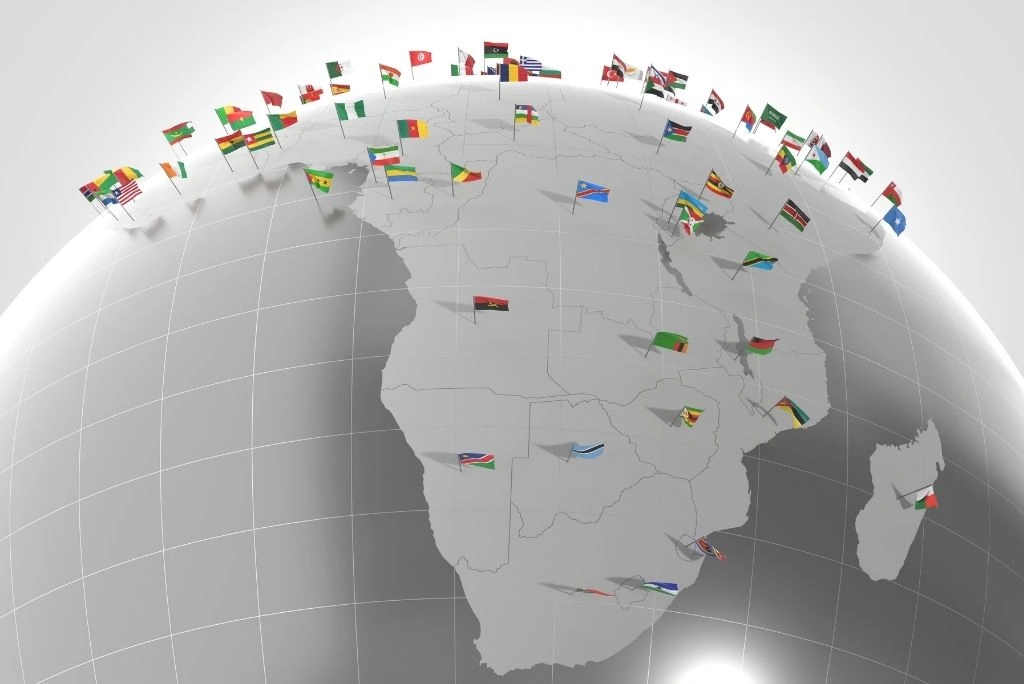
Africa is not a single market, and treating it as one is one of the most common mistakes investors make. East Africa, led by Kenya, Ethiopia, Tanzania, and Rwanda, has emerged as a hub for technology, agriculture, and infrastructure investment. West Africa, with Nigeria and Ghana as anchor markets, offers scale in consumer goods, fintech, and energy. North Africa, particularly Egypt and Morocco, attracts significant FDI in manufacturing, energy, and financial services. Southern Africa, anchored by South Africa, offers more developed capital markets and a sophisticated business ecosystem. Francophone West and Central Africa are seeing growing investor attention, particularly in infrastructure and natural resources.
Each regional market demands its own analysis, local relationships, and risk framework.
The medium-term trajectory for investment in Africa is supported by a combination of structural and cyclical forces. Digital transformation will continue accelerating across sectors. The green economy is becoming a major investment theme, driven both by global capital flows toward ESG mandates and by Africa’s own energy access imperatives. Regional integration under the AfCFTA framework, while implementation is still uneven, is creating the conditions for larger, more scalable market opportunities over time. Infrastructure modernization, from ports to power grids to data centers, is a generational investment cycle still in its early chapters.
Entrepreneurial ecosystems in Lagos, Nairobi, Cairo, Accra, Johannesburg, and Dakar are producing founders with a sophisticated understanding of their markets and increasingly strong track records. The talent pool is deepening, and the exit environment, while still developing, is improving.
The most successful investors in Africa in 2026 and beyond will be those who approach the continent with strategic patience, local market depth, and a long-term value creation mindset. Transactional, extractive approaches that work in more liquid markets rarely translate here. What works is genuine understanding of the communities and economies being served, the ability to build through complexity, and the willingness to stay in a market long enough to capture real structural growth.
The investment opportunities in Africa are real, they are growing, and they reward the kind of investors who take the time to understand what they are investing in.
Disclaimer: This content is for informational purposes only. Investment opportunities, market conditions, and economic trends may vary across African countries and industries. Readers should conduct independent research and seek professional financial or investment advice before making any investment decisions.
Sources
The strongest opportunities in 2026 span renewable energy, fintech, agribusiness, healthcare, and digital infrastructure. Renewable energy leads in FDI volume, driven by Africa’s 600 million people without reliable electricity. Fintech continues scaling through mobile money and embedded finance models, while agritech is attracting rapidly growing venture capital as food demand outpaces supply across the continent.
Africa is among the world’s fastest-growing regions, with projected GDP growth of 4.2 percent in 2026 and 22 countries expected to exceed 5 percent growth. A young, expanding population, accelerating urbanization, and deepening digital adoption are creating structural demand across nearly every sector. Foreign direct investment hit a record $97 billion in 2024, signaling growing global investor confidence in African markets.
Renewable energy has emerged as the dominant sector, accounting for roughly half of total FDI inflows into Africa in recent years. Fintech, infrastructure, and healthcare technology are also drawing significant capital from both institutional investors and development finance institutions. Manufacturing and agribusiness are gaining momentum as the African Continental Free Trade Area opens new regional value chain opportunities.
For patient, well-informed investors, Africa offers some of the most compelling long-term fundamentals of any emerging market. Population growth, urbanization, rising middle-class consumption, and continental trade integration under the AfCFTA create durable demand over decades. The key is entering with realistic expectations, strong local partnerships, and a genuine understanding of the specific country and sector being targeted.
Beginners can start through Africa-focused exchange-traded funds (ETFs), mutual funds, or investment platforms that provide diversified exposure without requiring direct market entry. Development finance institutions such as the IFC and AfDB also co-invest in funds accessible to institutional beginners. Researching specific country environments, starting with more established markets like Kenya, South Africa, Egypt, or Nigeria, and seeking guidance from a qualified financial advisor familiar with emerging markets is strongly recommended before committing capital.

Walk through an industrial park outside Nairobi and then spend an afternoon in a fintech office in Lagos, and you get two very different pictures of where Africa’s growth is coming from. One is stacked with pallets, packaging lines, and freight schedules. The other runs on laptops, cloud servers, and mobile transaction data. Both are […]

Walk into an investment conference in Nairobi, Lagos, or Cairo this year and the tone has shifted. Investors are no longer asking whether Africa is worth watching. They are asking which sector, which corridor, and which partner will get them in early. Africa’s investment landscape is evolving quickly, shaped by economic reforms, technological innovation, infrastructure […]

Africa’s investment story looks different in 2026 than it did five years ago. Growth is broader, capital is more selective, and the countries drawing serious long-term attention are the ones backing up their pitch with actual policy reform rather than promises. The continent’s real GDP growth accelerated to 4.2% in 2025, up from 3.1% the […]