

Africa is no longer just a source of raw commodities. The continent has been quietly building something more durable: a diverse, technology-driven economic base that is drawing serious capital from around the world. Private equity firms, development finance institutions, venture funds, and multinational corporations are all recalibrating their strategies to include Africa, and they are doing so with increasing conviction.
This shift is not accidental. It is the product of structural changes that have been building for years, demographic growth, urban expansion, rising digital connectivity, and a generation of entrepreneurs building solutions for real, large-scale problems. Understanding which sectors are at the center of this transformation is essential for any investor looking to position capital wisely on the continent.
The numbers tell part of the story. Foreign direct investment into Africa rose sharply in 2024, reaching $97 billion, a 75% increase that raised the continent’s share of global FDI from 4% to 6%, according to data tracked by the IMF and international investment analysts. The IMF also projects that Sub-Saharan Africa will outpace Asia in economic growth in 2026 for the first time, with six of the ten fastest-growing economies globally being African countries.
Several structural forces are driving investor interest:
Population and demographics. Africa’s population is the youngest in the world and is growing rapidly. This translates into an expanding labor force, rising consumer demand, and increasing pressure on every system from energy to healthcare to food supply. For investors, that means addressable markets that will continue growing for decades.
Urbanization. African cities are absorbing new residents at some of the highest rates globally. Urban centers create demand for housing, logistics networks, digital services, healthcare infrastructure, and retail, all sectors that are seeing significant capital inflows.
Digital adoption. Mobile internet penetration is rising steadily, and with it, the ability for technology companies to reach customers at scale without expensive physical infrastructure. Mobile subscriber penetration across Africa is projected to approach 50% by the end of the decade.
Regional trade integration. The African Continental Free Trade Area (AfCFTA) is gradually reducing barriers to cross-border trade and investment. The World Bank estimates that full AfCFTA implementation could boost FDI by up to 120%, with intra-African investment rising by roughly 85%.
These conditions, taken together, are creating an environment that offers long-term growth potential across multiple sectors simultaneously.
The table below offers a quick snapshot of the seven sectors leading Africa’s investment transformation in 2026, including what is driving capital in and which markets are most active.
| Sector | Key Investment Driver | 2025/2026 Funding Signal | Active Markets |
| Renewable Energy | 600M+ people without reliable electricity | ~50% of Africa’s total FDI inflows | Morocco, Kenya, South Africa, Egypt |
| Fintech & Digital Finance | 1.1B mobile money accounts; 400M+ unbanked adults | Largest VC sector by volume for several consecutive years | Nigeria, Kenya, Egypt, Ghana, Rwanda |
| Agritech | 60% of world’s uncultivated arable land in Africa | VC deal volume grew 22% in 2025 | Kenya, Nigeria, Ethiopia, Ghana |
| Healthcare & HealthTech | Young population, infrastructure gaps, rising middle class | $215M raised in 2025 (+232% YoY) | Nigeria, South Africa, Kenya, Ghana |
| E-commerce & Logistics | Rapid urbanization and growing digital consumer base | Scaling profitably in major urban corridors | Nigeria, Kenya, South Africa, Egypt |
| AI & Technology Services | B2B digitization of informal economies | $238M enterprise tech funding in 2025 (+55% YoY) | Lagos, Nairobi, Cairo, Cape Town, Accra |
| Sustainable Infrastructure | Urban growth and energy transition demand | IPF flows to Eastern & Southern Africa up 93% in 2024 | Egypt, Rwanda, Tunisia, Malawi |
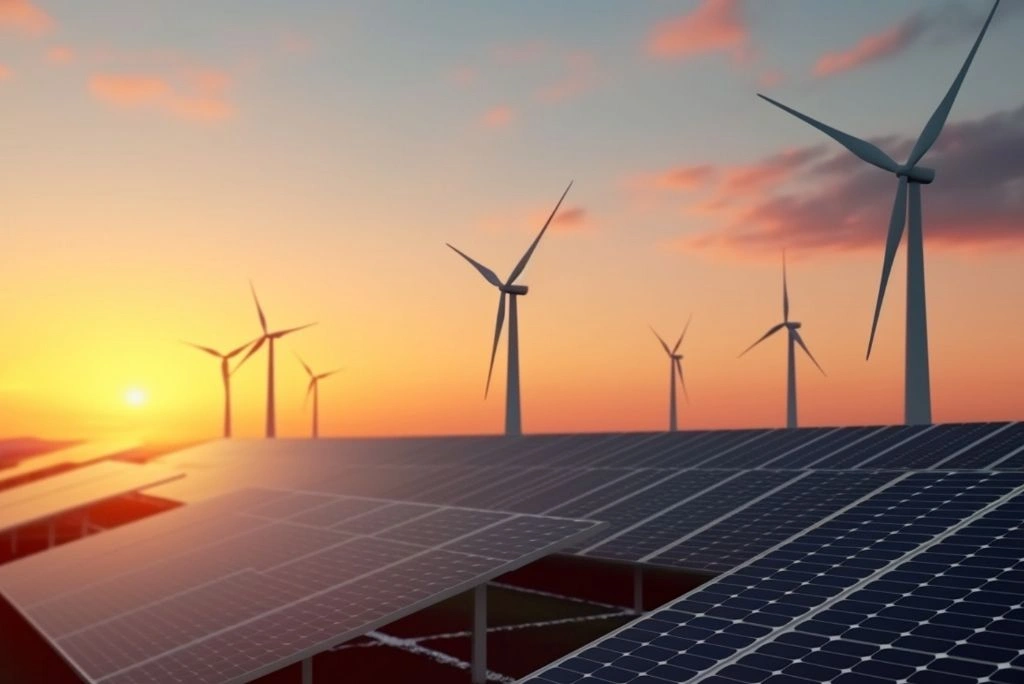
Energy access is one of Africa’s most pressing challenges and, simultaneously, one of its biggest investment opportunities. Over 600 million people across the continent still lack reliable access to electricity. Even in relatively developed markets like Kenya, grid instability forces businesses to rely on expensive diesel generators.
Renewable energy accounted for roughly 50% of total FDI inflows into Africa in recent years, and that share is growing. Solar deployment, distributed energy systems, mini-grid projects, and pay-as-you-go financing models are all attracting significant capital from both institutional investors and development finance institutions. Markets like Morocco, Kenya, South Africa, and Egypt have demonstrated what regulatory clarity and policy commitment can deliver: large-scale projects, bankable returns, and genuine progress on energy access.
International project finance flows to the Eastern and Southern Africa region increased by 93% in 2024, with grid expansion and renewable energy projects leading the way. Climate-focused funds are accelerating this trend. In early 2026, DEG committed $35 million to the Africa Go Green Fund, and Proparco invested $15 million in the African Transition Acceleration Fund, which aims to mobilize approximately $200 million for clean energy infrastructure projects.
For most of the past decade, African fintech and venture capital were almost synonymous. Mobile money platforms evolved from simple payment tools into full-service financial ecosystems covering payments, credit, savings, insurance, and cross-border transfers. Today, there are over 1.1 billion registered mobile money accounts across the continent.
Over 400 million adults in Sub-Saharan Africa remain unbanked or underbanked, which means the addressable market remains enormous. The most investable models in 2026 are those combining digital financial infrastructure with real-world asset backing, vehicle financing platforms, buy-now-pay-later solutions tied to productive assets, and embedded finance integrated into agricultural supply chains.
Nigeria, Kenya, and Egypt remain the primary fintech hubs, but Rwanda and Ghana are emerging as important secondary ecosystems. Regulatory attention is also increasing; new open banking frameworks in Nigeria and Kenya are giving well-positioned fintechs a structural advantage as the sector consolidates.
Africa holds approximately 60% of the world’s uncultivated arable land. Food demand is growing alongside the continent’s expanding population, yet post-harvest losses, fragmented supply chains, and outdated farming practices continue to limit productivity. That gap is a commercial opportunity.
The African Development Bank projects that agritech solutions could increase crop yields by up to 30% and reduce post-harvest losses by 50%. Precision farming tools, IoT sensors, satellite imagery, and AI-powered crop monitoring are scaling across East and West Africa. By the end of 2026, medium and large farms are expected to exceed 60% IoT adoption, with measurable impacts on yields and input costs.
The AfCFTA is amplifying this sector’s potential. Analysts estimate that full implementation could increase food exports by $2.5 billion while deepening agri-food value chains across the continent. Startups like Apollo Agriculture in Kenya, Thrive Agric in Nigeria, and Hello Tractor across multiple markets are demonstrating that technology-led agricultural models can scale and attract repeat investor interest.
Africa’s healthcare sector received $215 million in equity funding in 2025, a 232% year-on-year increase, according to Partech Africa’s annual venture capital report. The structural demand is clear: a young and growing population, significant gaps in healthcare infrastructure, and a digital transformation that is making it possible to deliver services remotely for the first time.
Telemedicine platforms, AI-powered diagnostic tools, medical device startups, and digital pharmacy networks are all scaling across the continent. Investors are increasingly recognizing that healthcare in Africa is not just a social need but a commercial opportunity, particularly in markets like Nigeria, South Africa, Kenya, and Ghana, where middle-class growth is creating demand for better-quality care.
One of the most significant investment opportunities in Africa is the rise of B2B e-commerce and the logistics infrastructure needed to support it. As retail becomes more digitized and urban middle classes expand their purchasing power, the last-mile delivery challenge has become one of the most investable problems on the continent.
Digital marketplaces, warehousing networks, and logistics startups are scaling profitably in dense urban corridors where e-commerce volumes justify the infrastructure investment. These businesses are not just platforms, they are the physical and digital arteries of the emerging African consumer economy, and they are building defensible positions in markets that most global retailers have yet to seriously enter.
Enterprise AI, software development, data analytics, and business automation are all expanding rapidly across Africa’s major tech ecosystems. Lagos, Nairobi, Cairo, Cape Town, and Accra have each developed clusters of talent and infrastructure that are attracting both local and global investment. African startups are increasingly building B2B solutions that digitize informal economies, creating scalable tools for industries ranging from logistics to agriculture to financial services.
Enterprise tech funding reached $238 million in 2025, a 55% year-on-year increase, according to Partech Africa data. The pattern reflects a broader maturation in the ecosystem, founders are building for profitability, investors are prioritizing unit economics, and the infrastructure for scaling regionally under AfCFTA is gradually falling into place.
Smart city projects, green building developments, transportation networks, and urban infrastructure are all drawing growing attention from long-term investors. International project finance to infrastructure projects across Eastern and Southern Africa rose sharply in 2024, reflecting confidence in both the underlying demand and the improving policy environment in several key markets.
Public-private partnerships are playing an increasingly important role in this space, enabling governments to access international capital while sharing risk with institutional investors who can help bring projects to completion.
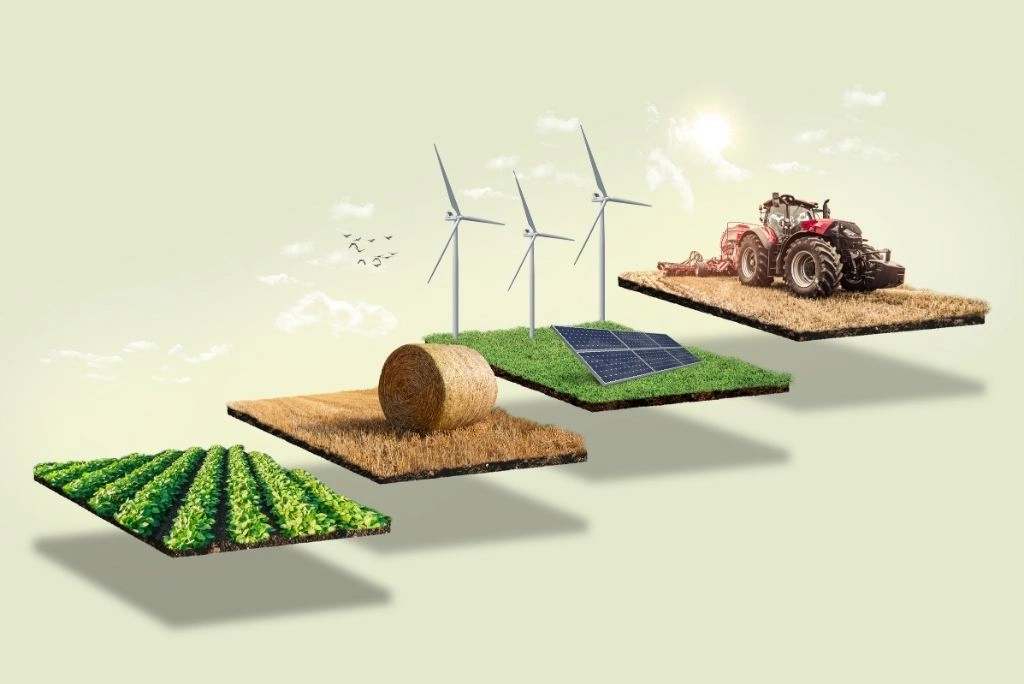
When analysts discuss the fastest growing industries in Africa, they consistently return to the same structural logic: sectors that solve essential, recurring problems at continental scale are where both growth and investor returns are converging. The 2025 funding data from Partech Africa makes the momentum concrete:
| Sector | 2025 Equity Funding | Year-on-Year Growth |
| Cleantech | $550 million | +186% |
| Healthtech | $215 million | +232% |
| Enterprise / AI | $238 million | +55% |
| Agritech | Growing deal volume | +22% in deals |
| Fintech | Largest overall share | Multi-year leader |
Cleantech saw the biggest jump in venture capital, growing 186% in 2025 to reach $550 million. Healthtech grew 232%. Enterprise technology grew 55%. These are not one-off spikes, they reflect durable demand that will compound as populations grow and digital infrastructure deepens.
African startups raised $705 million across 59 deals in Q1 2026 alone, a 26% year-on-year increase, with capital flowing into fintech, cleantech, agritech, logistics, healthtech, and AI. Total tech funding reached $4.1 billion in 2025, up 25% from the year before the first decisive rebound since the global venture downturn of 2023-2024.
Africa’s startup ecosystem has matured considerably over the past five years. It is no longer a collection of early-stage experiments. Ecosystems in Lagos, Nairobi, Cairo, Cape Town, and Accra now feature active accelerators, angel networks, and dedicated Africa-focused venture funds operating on the ground.
Nearly half of the funding raised by Africa’s top startups in 2026 came from African-based investors, according to Bloomberg’s analysis of the continent’s most-watched startups. That is a meaningful signal: local capital formation is growing, which reduces the sector’s dependence on global venture cycles and builds more resilient ecosystems over time.
The AfCFTA Startup Acceleration Programme 2026, backed by the AfCFTA Secretariat and international partners, is specifically designed to help startups scale beyond single markets in fintech, e-commerce, logistics, and agritech. Cross-border digital businesses that were once constrained by regulatory fragmentation now have a clearer path to regional scale.
No serious assessment of African markets can ignore the obstacles. Infrastructure gaps remain significant in many countries, adding 20-30% to operating costs for technology businesses that need consistent connectivity and power. Regulatory frameworks vary considerably across the continent’s 54 markets, which makes regional scaling more complex than it would be in a unified market. Currency volatility is a real concern in several economies, and it affects the actual dollar returns on investments even when the underlying business is performing well.
Access to financing for early-stage companies outside of the primary tech hubs remains uneven. And while the AfCFTA is lowering some trade barriers, implementation is still uneven across member states.
These are genuine challenges, not reasons to avoid the market. Investors who understand them and who factor them into deal structures, exit strategies, and operational plans are better positioned than those who either ignore them or use them as a blanket reason to stay away. The risk-adjusted opportunity in several African sectors is more attractive than many comparable emerging market allocations globally.
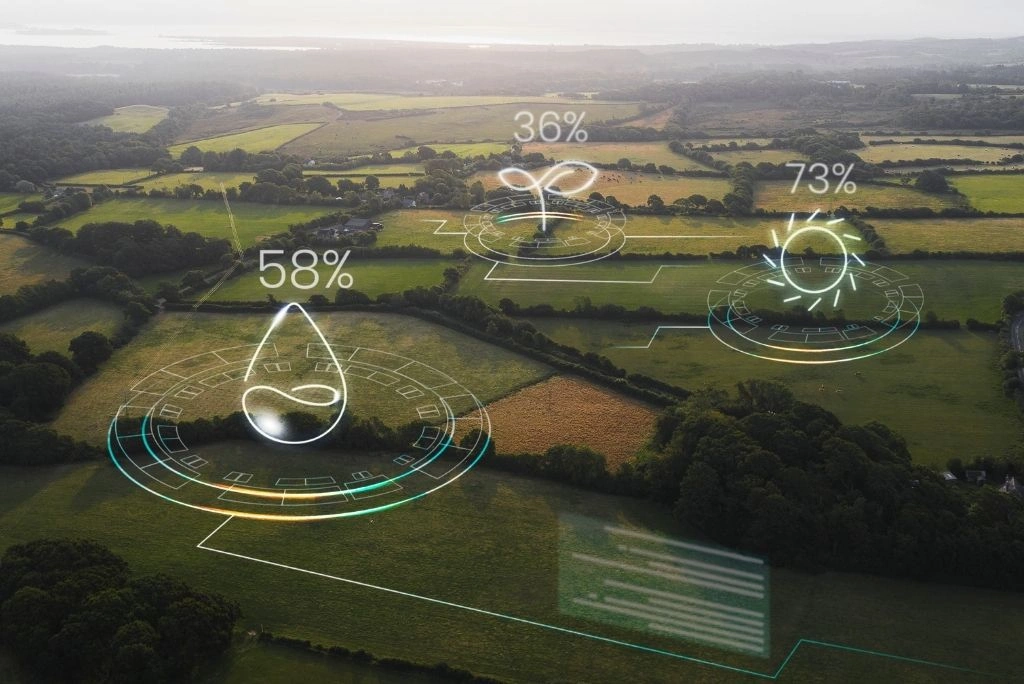
Several distinct trends are shaping how capital is flowing into African markets this year.
ESG and climate-focused investing is accelerating, with development finance institutions providing blended capital that de-risks early investments in renewable energy and clean infrastructure. This is making previously unbankable projects financeable.
Debt capital is replacing equity in some sectors. As investors demand capital efficiency, debt financing has become more prominent, particularly for asset-backed businesses with predictable revenue streams. Venture debt in Africa reached a record $1.64 billion in 2025, up 63% year-on-year.
Regional integration is creating new entry points. As AfCFTA implementation progresses, investors are starting to structure investments with multi-market scale as the base case, rather than targeting single-country opportunities that then face barriers to regional expansion.
Impact investing is moving closer to the mainstream, particularly in healthcare, education, and energy access. Development finance institutions and sovereign wealth funds are playing a larger anchor role in funds targeting these sectors.
The long-term trajectory is clear, even if the short-term path includes genuine uncertainty. Africa’s population will continue to grow, its cities will expand, its digital infrastructure will deepen, and the structural gaps in healthcare, energy, agriculture, and logistics will continue to generate demand for solutions at scale.
The continent has already demonstrated that innovation can emerge from constraint, mobile money, off-grid solar financing, and precision agriculture tools were all developed in response to infrastructure deficits that turned out to be commercial opportunities. That same dynamic is playing out now in AI, enterprise software, clean technology, and digital healthcare.
Investors with long time horizons, local market knowledge, and the patience to navigate regulatory complexity are finding that Africa’s markets offer genuine long-term value. Those who access current Africa market insights consistently, rather than relying on outdated assumptions, are the ones building differentiated positions in sectors that will define the continent’s economic future.
The sectors described in this article are not theoretical. They are drawing real capital right now, from serious investors, into businesses solving problems that hundreds of millions of people face every day. For investors who are willing to look carefully at what is actually happening on the ground, the picture is substantively different from the narrative that many Western markets still apply to Africa by default.
Disclaimer: The content in this article is for informational purposes only. Investment conditions, market opportunities, and economic trends vary significantly across African countries and industries. The data and projections referenced reflect publicly available research from international institutions and market reports available at the time of writing. Readers should conduct their own independent research and consult qualified financial or investment advisors before making any investment decisions.
Sources
The data, statistics, and trends cited in this article are drawn from the following authoritative sources:
UNCTAD – Africa: Foreign Investment Hit Record High in 2024
https://unctad.org/news/africa-foreign-investment-hit-record-high-2024
UNCTAD – Foreign Direct Investment Trends in Emerging Markets: A Focus on Africa https://unctad.org/publication/foreign-direct-investment-trends-emerging-markets-focus-africa
UNCTAD – Eastern and Southern Africa: Foreign Investment Surged to Record Highs
https://unctad.org/news/eastern-and-southern-africa-foreign-investment-surged-record-highs
IMF – Regional Economic Outlook for Sub-Saharan Africa, April 2026
https://www.imf.org/en/publications/reo/ssa/issues/2026/04/16/regional-economic-outlook-for-sub-saharan-africa-april-2026
IMF – Africa Faces Mounting Risks Just as Growth Gains Take Hold
https://www.imf.org/en/blogs/articles/2026/04/23/africa-faces-mounting-risks-just-as-growth-gains-take-hold
World Bank – Africa Regional Overview
https://www.worldbank.org/ext/en/region/afr
World Bank – African Continental Free Trade Area: FDI and Integration Report https://documents1.worldbank.org/curated/en/099305006222230294/pdf/P1722320bf22cd02c09f2b0b3b320afc4a7.pdf
Partech Africa – 2025 Africa Tech Venture Capital Report
https://partechpartners.com/africa-reports/2025-africa-tech-venture-capital-report
Partech Africa – 2025 VC Report Press Release: African Tech Funding Rebounds to $4.1B https://partechpartners.com/news/2025-partech-africa-tech-vc-report-african-tech-funding-rebounds-to-us41b-driven-by-record-debt-activity-and-disciplined-equity-growth
African Development Bank – Feed Africa
https://www.afdb.org/en/annual-report-and-financial-report-2023/bank-group-operations-through-high-5-lens/feed-africa
TechPoint Africa – Climate Tech in Africa 2026: Clean Energy Beats Fintech
https://techpoint.africa/guide/climate-tech-africa-2026-clean-energy-beats-fintech/
ISS Africa – The Rising Stakes of Foreign Investment in Africa
https://issafrica.org/iss-today/the-rising-stakes-of-foreign-investment-in-africa
ISS African Futures – Africa Financial Flows Forecast
https://futures.issafrica.org/thematic/10-financial-flows/
Africa Bulletin – Africa’s Agriculture and Agritech Markets in 2026
https://africabulletin.com/africas-agriculture-and-agritech-markets-in-2026-growth-innovation-and-opportunity/
FurtherAfrica – Agritech Is Transforming Africa’s Economy and Financial Future https://furtherafrica.com/2025/11/11/agritech-is-transforming-africas-economy-and-financial-future/
Healthtech led 2025 with 232% year-on-year growth, while cleantech surged 186% to $550 million on the back of renewable energy deals and climate-focused institutional capital. Enterprise technology and AI services grew 55%, and agritech deal volume expanded 22% as precision farming tools scaled across East and West Africa. Fintech remains the largest sector overall, supported by over 1.1 billion registered mobile money accounts. These sectors are growing not because of investor hype but because each one addresses a structural gap in energy, health, finance, or food that hundreds of millions of people face daily.
Africa’s demographics, digital growth, and supply gaps are creating long-duration investment opportunities that are rare in most other markets. FDI into Africa reached a record $97 billion in 2024, a 75% increase, even as global FDI declined, signaling genuine conviction rather than passive allocation. The continent holds the world’s youngest and fastest-growing population, driving compounding demand for financial services, healthcare, energy, and food systems for decades ahead. Mobile subscriber penetration is approaching 50% by end of decade, and the AfCFTA is reducing cross-border barriers in ways the World Bank estimates could boost African FDI by up to 120%.
Fintech has delivered the strongest venture capital returns over the past several years, with notable exits including Paystack and Flutterwave, and the most attractive 2026 models combine payments with embedded credit and B2B finance for SMEs. Renewable energy generates strong long-term returns through asset-backed structures, with pay-as-you-go solar companies demonstrating durable unit economics and accounting for roughly 50% of Africa’s total FDI inflows. Agritech platforms that solve real productivity bottlenecks for farmers rather than simply digitizing existing processes are also posting solid returns, as seen with Apollo Agriculture in Kenya. Returns ultimately depend on sector, deal structure, and time horizon, and investors with genuine local market knowledge consistently outperform those applying generic assumptions.
Africa’s emerging sectors are generating economic impact through three channels: job creation, financial inclusion, and diversification away from commodity dependence. Fintech, agritech, logistics, and healthtech are producing formal employment in economies where informal work still dominates, with positive spillovers for suppliers and small traders using digital platforms to reach markets. Over 400 million adults in Sub-Saharan Africa remain unbanked, and mobile money is pulling this population into formal financial systems, enabling saving, borrowing, and business formation at scale. Agriculture employs more than 60% of the continent’s workforce, so when agritech tools cut post-harvest losses and connect farmers to credit and markets, the effect on rural incomes and food security is immediate and significant.
The dominant trends shaping African investment through 2026 and beyond are climate-aligned capital, the rise of debt financing, AfCFTA-driven multi-market models, and AI-enabled enterprise tools. Blended finance vehicles backed by development institutions are making clean energy and sustainable agriculture commercially viable at scale, while venture debt, which hit a record $1.64 billion in 2025, is gradually replacing pure equity as the preferred instrument for scaling proven businesses. AfCFTA implementation is pushing investors toward pan-African business models in payments, logistics, and healthcare rather than single-country plays. The IMF has flagged AI adoption in agriculture, health, and public services as potentially transformative for regional productivity, pointing to enterprise software and applied AI as sectors that will attract significantly more capital in the years ahead.

Walk through an industrial park outside Nairobi and then spend an afternoon in a fintech office in Lagos, and you get two very different pictures of where Africa’s growth is coming from. One is stacked with pallets, packaging lines, and freight schedules. The other runs on laptops, cloud servers, and mobile transaction data. Both are […]

Walk into an investment conference in Nairobi, Lagos, or Cairo this year and the tone has shifted. Investors are no longer asking whether Africa is worth watching. They are asking which sector, which corridor, and which partner will get them in early. Africa’s investment landscape is evolving quickly, shaped by economic reforms, technological innovation, infrastructure […]

Africa’s investment story looks different in 2026 than it did five years ago. Growth is broader, capital is more selective, and the countries drawing serious long-term attention are the ones backing up their pitch with actual policy reform rather than promises. The continent’s real GDP growth accelerated to 4.2% in 2025, up from 3.1% the […]